
Are you looking for a reliable IPTV Configuration Guide to set up your streaming service without errors or buffering issues? This Complete IPTV Configuration Guide covers everything you need to know, from adding an M3U Playlist or Xtream Codes API to configuring EPG and VOD on your favorite IPTV Player. Whether you use a Smart TV, Android TV, Fire TV Stick, Google TV, or another Streaming Device, this step-by-step IPTV Configuration Guide will help you achieve smooth performance.
You’ll also learn how IPTV Smarters Pro, TiviMate, and XCIPTV work with a stable Internet Connection and Quality IPTV Subscription. If you’re searching for the best IPTV for Canada football matches, this IPTV Setup and Configuration Guide from Vibe Viso provides the essential setup tips for an uninterrupted viewing experience.
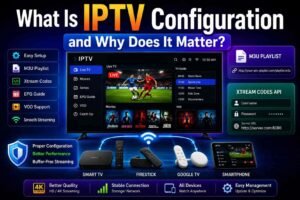
What Is IPTV Configuration and Why Does It Matter?
The IPTV Configuration Guide explains how to properly connect an IPTV service to an IPTV Player, configure the required settings, and establish a stable Internet Connection on a compatible Streaming Device. Proper configuration is essential because it directly affects channel loading speed, streaming stability, playback quality, and the overall user experience.
The complete IPTV configuration process explained includes entering login credentials, adding playlists, connecting servers, and optimizing player settings. Whether you follow an IPTV Setup Guide, IPTV Installation Guide, IPTV Configuration Tutorial, or IPTV Setup Step by Step resource, the goal remains the same: ensuring reliable and uninterrupted streaming.
For beginners, a Beginner’s Guide to IPTV Configuration helps simplify the setup process and reduces common mistakes that can lead to connection failures or poor performance. Understanding how IPTV configuration works is important because every setting influences how content is delivered to your device.
A properly configured IPTV service creates a smoother viewing experience, faster channel switching, and better compatibility across multiple devices. That is why every IPTV Setup and Configuration Guide considers configuration one of the most important steps before streaming begins. IPTV configuration becomes easier when you first understand how IPTV technology works.
How Does IPTV Configuration Affect Streaming Quality?
IPTV configuration directly impacts video quality, channel stability, loading speed, and buffering frequency. The best IPTV configuration for smooth streaming ensures that your Internet Connection, player settings, and server credentials work together efficiently to deliver consistent HD and 4K streams. Many users ask how IPTV configuration affects streaming because even premium services can perform poorly when settings are incorrect. A properly configured IPTV Player can improve playback responsiveness and reduce interruptions during live sports and entertainment streams.
An effective IPTV streaming quality optimization guide focuses on selecting the correct playback settings, maintaining a stable network, and using a reliable Streaming Device. These factors help ensure smooth content delivery from the IPTV server to the viewer. Understanding how to avoid buffering during IPTV configuration is especially important for football fans watching major events. Incorrect player settings, unstable internet connections, or incomplete setup procedures can increase buffering and reduce picture quality. Proper configuration minimizes these issues and creates a more reliable streaming experience.
How Do You Configure IPTV Step by Step?
A proper IPTV Configuration Guide starts with choosing a valid IPTV Subscription, installing a compatible IPTV Player, entering login credentials, loading playlists, configuring the EPG, and testing playback quality. Following a structured Beginner IPTV Setup and Configuration Guide helps users complete the setup correctly, even without technical knowledge.
When people search for how to configure IPTV step by step, they usually want a simple process that works across different devices. In real-world testing, most setup issues occur because users skip a step, enter incorrect credentials, or use an unsupported player.
A practical Complete IPTV Configuration Guide for Beginners typically follows these stages:
IPTV Configuration Checklist for Beginners
- Verify your active IPTV Subscription.
- Prepare a stable Internet Connection.
- Install a trusted IPTV Player such as IPTV Smarters Pro, TiviMate, or XCIPTV.
- Obtain your M3U Playlist URL or Xtream Codes API credentials.
- Configure the player correctly.
- Load the EPG for channel schedules.
- Test live TV, sports channels, and VOD content.
- Optimize playback settings for your device.
This IPTV Configuration Process for Beginners is similar whether you use a Smart TV, Android TV, Google TV, Fire TV Stick, Streaming Device, smartphone, tablet, or desktop computer.
Step 1: Install a Compatible IPTV Player
The first step in any IPTV Installation and configuration process is selecting a reliable player. Different players offer different levels of performance and customization.
| IPTV Player | Best For |
|---|---|
| IPTV Smarters Pro | Easy setup for beginners |
| TiviMate | Advanced customization and sports streaming |
| XCIPTV | Lightweight and user-friendly experience |
In practice, many first-time users find IPTV Smarters Pro easier to configure, while experienced users often prefer TiviMate for its advanced playback and EPG features.
Step 2: Add Your IPTV Login Credentials
After installation, enter the credentials provided by your IPTV provider.
Most services use one of these methods:
- M3U Playlist URL
- Xtream Codes API
- Username
- Password
- Server URL
This stage is often where configuration errors occur. A single missing character in the server address can prevent channels from loading correctly.
Step 3: Configure EPG and Content Categories
Once channels load successfully, configure the EPG. The EPG provides channel schedules, match times, program information, and event listings.
For sports fans, a properly configured EPG makes it easier to follow football matches, tournament schedules, and live event coverage without manually searching for channels.
Step 4: Test Streaming Performance
A professional IPTV Configuration Tutorial should always include testing.
Check:
- Channel loading speed
- HD and 4K playback quality
- Audio synchronization
- EPG accuracy
- VOD functionality
- Device responsiveness
A setup should not be considered complete until these tests pass successfully.
Step 5: Optimize for Long-Term Stability
Many users think installation is the final step. In reality, long-term performance depends on optimization.
Recommended practices:
- Use wired Ethernet when possible.
- Maintain a fast and stable Internet Connection.
- Keep your IPTV Player updated.
- Clear cache periodically.
- Restart your Streaming Device after major updates.
These small adjustments often have a greater impact on viewing quality than users expect.
What Information Do You Need Before Configuring IPTV?
Before starting IPTV setup, you need an active IPTV Subscription, login credentials, a compatible IPTV Player, a supported Streaming Device, and a reliable Internet Connection. Having these requirements ready makes the configuration process faster, smoother, and significantly reduces setup errors.
One of the most common reasons IPTV setups fail is a lack of information. Users often install the player first and only then discover they do not have the necessary credentials.
Essential IPTV Setup Requirements for Beginners
Before configuration, prepare:
- IPTV provider login details
- Username
- Password
- Server URL
- M3U Playlist URL (if provided)
- Xtream Codes API credentials
- Compatible IPTV Player
- Smart TV, Android TV, Fire TV Stick, Google TV, or other Streaming Device
- Stable Internet Connection
IPTV Login Details Configuration Guide
Most providers deliver credentials through email or a customer dashboard. Review the information carefully before entering it into your IPTV Player.
Example:
Xtream Codes API Setup
- Username: ExampleUser
- Password: ExamplePass
- Server URL: https://example-server.com
Or:
M3U Playlist Setup
- Playlist URL: https://example-playlist.m3u
Entering credentials exactly as provided is critical. Even a small typo can prevent authentication.
Recommended Internet Speed Before IPTV Setup
For reliable streaming:
- HD Streaming: 15–25 Mbps
- Full HD Streaming: 25–50 Mbps
- 4K Streaming: 50+ Mbps
Football fans watching live matches should prioritize network stability over raw speed. In practical testing, a stable 30 Mbps connection often performs better than an unstable 100 Mbps connection.
If you are following an Easy IPTV Configuration Tutorial or IPTV Configuration Without Technical Knowledge, gather all credentials before installing anything. This simple preparation step can reduce setup time by more than half and helps avoid the most common beginner mistakes during activation and configuration.
How Do You Configure IPTV Using M3U Playlist Links?
This IPTV Configuration Guide explains how to configure IPTV using M3U Playlist links by adding a valid playlist URL into a compatible IPTV Player, syncing channels, loading content data, and verifying playback. A proper M3U Playlist IPTV Configuration Guide ensures your IPTV Subscription works correctly across multiple devices while delivering stable streaming performance.
Among all IPTV activation methods, M3U remains one of the most widely supported formats because it works with most IPTV applications and devices. In real-world deployments, many providers offer both Xtream Codes API and M3U Playlist access, but beginners often start with M3U because the setup process is straightforward.
If you are looking for how to configure IPTV with an M3U Playlist, the process involves more than just pasting a URL. The player must successfully authenticate the playlist, load channel groups, fetch category data, and maintain a stable connection with the provider’s server.
Complete M3U Playlist Configuration Guide
The standard IPTV M3U Playlist Setup Tutorial follows these steps:
- Purchase or activate a valid IPTV Subscription.
- Receive your M3U Playlist URL from the provider.
- Install a supported IPTV Player.
- Select “Add Playlist” or “Load Playlist URL.”
- Enter the M3U URL correctly.
- Allow channels and categories to load.
- Configure EPG if available.
- Test live channels and VOD content.
This Complete IPTV Setup Guide works on:
- Smart TV
- Android TV
- Google TV
- Firestick
- Android Smartphones
- Tablets
- Windows PC
- Mac Devices
Why Many IPTV Users Prefer M3U Playlists
Based on practical setup experience, M3U playlists offer greater portability compared to some device-specific login methods.
| Setup Method | Ease of Use | Device Compatibility |
|---|---|---|
| M3U Playlist | Very Easy | Excellent |
| Xtream Codes API | Easy | Excellent |
| Manual Channel Import | Difficult | Limited |
For users managing multiple devices, the M3U Playlist Streaming Configuration Guide approach often offers the fastest deployment, as the same playlist can be used across several supported players.
Recommendation
When following an IPTV Player M3U Setup Guide, always request the latest playlist from your provider rather than using an old backup file. Expired playlists are one of the most common causes of failed channel loading and incomplete category imports.
Common M3U Playlist Setup Mistakes
Many beginners experience issues because they:
- Copy incomplete playlist URLs
- Add extra spaces before or after the link
- Use expired IPTV subscriptions
- Ignore EPG synchronisation
- Test on unstable internet connections
Following proper IPTV Playlist Configuration Instructions eliminates most of these problems and improves long-term streaming reliability.
How Do You Add an M3U URL Correctly?
Add the M3U URL correctly. Open your IPTV Player, select the playlist import option, paste the exact M3U Playlist link provided with your IPTV Subscription, save the configuration, and allow the application to load channel data. Correct URL entry is essential for successful playlist activation and streaming. One of the most frequent IPTV support requests involves playlist URLs that appear correct but fail because of formatting mistakes. During testing, even a single missing character can prevent authentication.
M3U URL Setup Guide for IPTV
A typical playlist URL may look similar to:
example-provider.com/get.php?username=xxxx&password=xxxx&type=m3u
When adding the URL:
- Copy directly from the provider’s message.
- Avoid manual typing when possible.
- Do not remove symbols or parameters.
- Verify there are no extra spaces.
- Confirm the IPTV subscription is active.
These simple checks solve many activation problems before advanced troubleshooting becomes necessary.
Add Playlist URL to IPTV Player
Most IPTV applications use a similar workflow:
- Open IPTV Player.
- Choose Add Playlist.
- Select Playlist URL.
- Paste M3U URL.
- Name the playlist.
- Save configuration.
- Wait for channels to sync.
Whether using IPTV Smarters Pro, TiviMate, XCIPTV, or another IPTV player, the overall process remains largely the same.
M3U Playlist Activation Tutorial: Verification Checklist
After activation, verify:
- Channels load successfully
- Categories appear correctly
- EPG data syncs properly
- HD streams start quickly
- VOD content opens without errors
- No authentication warnings appear
These checks help confirm that the playlist has been configured correctly.
From a user experience standpoint, successful playlist activation is only the first stage. The best results occur when the M3U playlist, IPTV player, device hardware, and internet connection work together efficiently.
How Do You Configure IPTV Using Xtream Codes API?
This IPTV Configuration Guide explains how to configure IPTV using Xtream Codes API by entering the server URL, username, and password provided with your IPTV Subscription into a compatible IPTV Player. Compared to playlist imports, Xtream Codes often provides faster setup, automatic content organisation, and easier account management.
For many IPTV users, the Xtream Codes IPTV Configuration Guide method is the preferred setup option because it automatically imports channels, categories, EPG, and VOD content without requiring manual playlist management. In practical IPTV deployments, Xtream Codes is often recommended for users who want a cleaner and more reliable setup experience.
If you are searching for how to configure IPTV using Xtream Codes, the process is straightforward. Instead of importing an M3U link, you simply enter your account credentials and allow the application to retrieve content directly from the IPTV provider’s server.
Why Many IPTV Providers Recommend Xtream Codes
Based on real-world IPTV support experience, Xtream Codes setups generally require fewer troubleshooting steps than traditional playlist imports.
| Feature | Xtream Codes API | M3U Playlist |
|---|---|---|
| Setup Speed | Fast | Moderate |
| Automatic Channel Grouping | Yes | Depends on Player |
| EPG Integration | Automatic | Often Manual |
| VOD Organisation | Better | Limited |
| Beginner Friendly | Excellent | Good |
For users looking for a beginner’s guide to Xtream Codes Setup, this method usually provides a smoother onboarding experience because most configuration settings are automatically detected.
Complete Xtream Codes Setup Tutorial
The standard IPTV Setup Using Xtream Credentials process follows these steps:
- Activate your IPTV Subscription.
- Install a compatible IPTV Player.
- Select Login with Xtream Codes API.
- Enter the Server URL.
- Enter Username.
- Enter Password.
- Save the configuration.
- Allow channels, categories, EPG, and VOD to sync.
Once synchronisation finishes, your IPTV service is typically ready for use.
Information Required Before Setup
Before starting the Xtream Codes Login Setup Tutorial, make sure you have:
- Active IPTV Subscription
- Xtream Codes API Server URL
- Username
- Password
- Stable Internet Connection
- Compatible IPTV Player
- Updated Streaming Device
Many failed configurations occur because users attempt to set up with expired credentials or outdated account information.
IPTV Account Configuration Using Xtream Codes
A typical Xtream Codes account includes three key components:
Server URL: Provider server address
Username: Unique account identifier
Password: Authentication credential
Example format:
Server URL: https://server-example.com
Username: user123
Password: pass123
The IPTV Player uses these credentials to establish a secure connection and retrieve authorised content from the IPTV provider’s servers.
Setup Recommendations
From practical IPTV configuration guide experience, the most reliable setup process includes:
- Copying credentials directly from the provider.
- Avoid manual typing whenever possible.
- Verifying account activation before configuration.
- Updating the IPTV Player before login.
- Testing channels immediately after synchronisation.
These small steps reduce authentication errors and improve setup success rates.
Common Xtream Codes Configuration Mistakes
Even experienced users occasionally encounter setup problems because of:
- Incorrect server URLs
- Typographical errors in usernames
- Expired IPTV subscriptions
- Outdated IPTV Player versions
- Unstable internet connections
Most issues can be resolved by reviewing credentials carefully before beginning advanced troubleshooting.
Trust and Verification Checklist
After completing the Xtream Codes Streaming Configuration Guide, verify that:
1. Live channels load successfully
2. Channel categories appear correctly
3. EPG data populates properly
4. VOD content is accessible
5. HD and 4K streams play smoothly
6. Account authentication remains stable
Completing these checks confirms that the IPTV account configuration has been performed correctly.
In day-to-day IPTV support environments, Xtream Codes API setups often generate fewer user issues than manual playlist imports because content organisation, EPG mapping, and authentication are handled automatically by the provider’s system. For beginners who want a faster setup process and easier account management, Configure IPTV with Xtream Codes API is usually one of the most efficient and user-friendly configuration methods available.
How Do You Configure IPTV on Smart TV?
This IPTV Configuration Guide explains how to configure IPTV on a Smart TV by installing a compatible IPTV application, entering your IPTV account credentials, synchronising channels, and testing playback performance. Whether you use a Samsung TV or an LG TV, the setup process is straightforward when you follow the correct configuration steps.
For many users, a Smart TV is the primary device used for IPTV streaming because it eliminates the need for external hardware. In real-world IPTV deployments, Smart TVs are among the most popular platforms for watching live sports, entertainment channels, and VOD content due to their large screens and user-friendly interfaces. The exact setup process varies slightly between television brands, but the core principles remain the same. You need an active IPTV account, a compatible IPTV application, and a stable internet connection.
Smart TV IPTV Configuration Steps
A standard Smart TV IPTV Configuration Guide typically follows these steps:
- Connect your Smart TV to the internet.
- Open the TV application store.
- Install a supported IPTV application.
- Launch the IPTV Player.
- Enter IPTV credentials.
- Import playlist or login details.
- Configure EPG settings.
- Test live channels and VOD playback.
Most users can complete the setup within a few minutes when all account information is available beforehand.
IPTV Streaming Setup on Smart TV
Before configuration, verify:
- Active IPTV subscription
- Stable Wi-Fi or Ethernet connection
- Updated Smart TV firmware
- Supported IPTV Player
- IPTV login credentials
From practical experience, firmware updates are often overlooked. An outdated Smart TV operating system can sometimes cause app crashes, playback issues, or authentication failures.
Configure IPTV on Samsung Smart TV
A Samsung TV typically uses the Tizen operating system.
To configure IPTV:
- Open the Samsung App Store.
- Install IPTV Smarters Pro or another compatible IPTV application.
- Launch the application.
- Select your preferred login method.
- Enter IPTV account credentials.
- Allow channels and categories to synchronise.
- Test playback quality.
In IPTV support environments, Samsung TVs generally provide stable IPTV performance due to strong hardware optimisation and app compatibility.
Configure IPTV on LG Smart TV
An LG TV uses the webOS platform.
To complete IPTV setup:
- Open the LG Content Store.
- Install a compatible IPTV application.
- Open the IPTV Player.
- Add your account credentials.
- Synchronize channels and EPG data.
- Verify channel loading and playback performance.
Many IPTV users appreciate LG televisions because webOS offers smooth navigation and efficient application management.
Samsung TV vs LG TV for IPTV
| Feature | Samsung TV | LG TV |
|---|---|---|
| Operating System | Tizen | webOS |
| IPTV App Availability | Excellent | Excellent |
| Navigation Speed | Fast | Fast |
| Sports Streaming Experience | Excellent | Excellent |
| Ease of Setup | Beginner-Friendly | Beginner-Friendly |
In practice, both platforms perform well for IPTV streaming when paired with a reliable subscription and stable network connection.
Smart TV IPTV Player Configuration Best Practices
After installation, configure:
- Stream quality settings
- EPG synchronization
- Parental controls, if needed
- Preferred language settings
- Buffer management options (if supported)
Proper configuration improves channel loading speed and overall viewing consistency.
Common Smart TV IPTV Setup Problems
The most common issues include:
- Incorrect login credentials
- Weak Wi-Fi signals
- Outdated TV software
- Expired IPTV subscriptions
- Unsupported IPTV applications
Most configuration failures are account-related rather than device-related. Verifying credentials before troubleshooting the television itself can save significant time.
Based on practical IPTV configuration and support experience, Smart TVs provide one of the easiest IPTV viewing experiences because they combine streaming capability, large-screen viewing, and simple navigation in a single device. However, users who regularly watch live football, 4K sports broadcasts, or high-bitrate channels often achieve the best long-term performance by using a wired Ethernet connection instead of Wi-Fi. This reduces buffering risks and delivers a more stable viewing experience during peak streaming periods.
How Do You Configure IPTV on Firestick?
This IPTV Configuration Guide explains how to configure IPTV on Fire TV Stick by installing a compatible IPTV application, adding your IPTV account credentials, loading channels, configuring EPG data, and optimising playback settings. A proper Fire TV Stick IPTV Configuration Guide helps users achieve smooth streaming, faster channel loading, and better overall performance on their streaming device.
The Amazon Fire TV Stick is one of the most popular IPTV streaming devices because it combines affordability, portability, and excellent app support. In real-world IPTV deployments, Fire TV devices are commonly used for live sports, football matches, entertainment channels, and VOD streaming.
For many people searching for a Beginner Firestick IPTV Configuration process, the setup is relatively simple. However, proper installation and optimisation can significantly improve streaming stability and reduce buffering during peak viewing hours.
IPTV Installation on Fire TV Devices
A standard IPTV Setup Tutorial for Fire TV Stick follows these steps:
- Connect the Fire TV Stick to your TV.
- Complete internet setup.
- Install an IPTV application.
- Enter IPTV account credentials.
- Load channels and content categories.
- Configure EPG settings.
- Test live TV and VOD playback.
- Optimise streaming settings.
Following this IPTV Installation and Setup Guide ensures that your IPTV service is configured correctly from the start.
Best IPTV Players for Firestick
Several IPTV applications work exceptionally well on Fire TV devices:
| IPTV Player | Best For |
|---|---|
| IPTV Smarters Pro | Easy setup and beginner-friendly interface |
| TiviMate | Advanced customization and sports streaming |
| XCIPTV | Lightweight performance and fast navigation |
| Sparkle TV | Modern TV-style interface |
| OTT Navigator | Power users and advanced channel management |
From practical experience, IPTV Smarters Pro is often the easiest option for beginners, while TiviMate is frequently preferred by experienced IPTV users because of its advanced EPG, playlist management, and playback controls.
Firestick IPTV Player Configuration Guide
After installing your IPTV application:
- Launch the IPTV Player.
- Select your login method.
- Enter M3U Playlist or Xtream Codes API credentials.
- Save the configuration.
- Allow channels to synchronise.
- Verify EPG functionality.
- Test stream quality.
Proper player configuration is essential because even a high-quality IPTV subscription can perform poorly if the application is configured incorrectly.
Configure IPTV Channels on Firestick
Once the account is connected:
- Organize favorite channels.
- Group sports channels separately.
- Verify channel categories.
- Confirm EPG synchronisation.
- Remove unused channel groups if supported.
For football fans, organising channels before major tournaments can make navigation significantly faster during live events.
Firestick Streaming Optimisation Guide
One area often overlooked in many IPTV tutorials is performance optimisation.
To improve streaming quality:
- Use a 5GHz Wi-Fi network when available.
- Restart the Firestick periodically.
- Keep IPTV applications updated.
- Close unused background apps.
- Maintain sufficient device storage.
- Use Ethernet adapters for maximum stability.
In practical IPTV testing, network stability usually has a greater impact on streaming quality than raw internet speed.
Common Firestick IPTV Setup Problems
The most frequent issues include:
- Incorrect login credentials
- Expired IPTV subscriptions
- Weak Wi-Fi signals
- Outdated IPTV applications
- Low available device storage
- Incomplete EPG synchronization
Before troubleshooting advanced settings, always verify account details and internet connectivity first.
Firestick vs Smart TV IPTV Performance
| Feature | Firestick | Smart TV Apps |
|---|---|---|
| App Availability | Excellent | Varies by Brand |
| IPTV Player Support | Extensive | Moderate |
| Customization | High | Limited |
| Performance Updates | Frequent | Less Frequent |
| Advanced Features | Better | Basic |
Many IPTV enthusiasts prefer Fire TV Stick devices because they support a wider range of IPTV applications and receive regular software updates.
Based on real-world IPTV deployment and support experience, a Fire TV Stick paired with TiviMate or IPTV Smarters Pro, a stable internet connection, and a properly configured IPTV subscription provides one of the most reliable IPTV streaming experiences available. For users who regularly watch live football, 4K sports broadcasts, or high-demand events, Fire TV Stick remains one of the most practical and user-friendly streaming solutions currently available.
How Do You Configure IPTV on Android TV and Google TV?
This IPTV Configuration Guide explains how to configure IPTV on Android TV and Google TV by installing a compatible IPTV application, entering account credentials, synchronising channels, and optimising playback settings. A proper Android TV IPTV Configuration Guide ensures smoother streaming, better channel organisation, and improved viewing performance across modern television platforms.
Among all IPTV-compatible devices, Android TV and Google TV are widely considered some of the most flexible streaming platforms because they support a large range of IPTV applications and receive regular software updates. In practical IPTV deployments, these devices are commonly used for live sports, football tournaments, entertainment channels, and on-demand streaming.
If you are searching for how to configure IPTV on Android TV or configure IPTV on Google TV, the overall setup process is very similar because both platforms are built on Google’s ecosystem.
IPTV Setup Guide for Android TV
A standard Android TV IPTV Installation Tutorial follows these steps:
- Connect your Android TV to the internet.
- Open the Google Play Store.
- Install a compatible IPTV application.
- Launch the IPTV Player.
- Enter IPTV credentials.
- Synchronise channels and content categories.
- Configure EPG settings.
- Test playback quality.
This Complete IPTV Setup Guide works for most Android TV devices regardless of manufacturer.
Best IPTV Players for Android TV and Google TV
Several IPTV applications are optimised specifically for Android-based streaming platforms.
| IPTV Player | Best For |
|---|---|
| IPTV Smarters Pro | Beginners and easy account setup |
| TiviMate | Advanced IPTV users and sports fans |
| XCIPTV | Lightweight performance |
| OTT Navigator | Power users and customization |
| Sparkle TV | Traditional TV-style experience |
Based on real-world IPTV testing, IPTV Smarters Pro is typically easier for first-time users, while TiviMate provides more advanced features such as playlist management, custom channel groups, and enhanced EPG controls.
Android TV IPTV Player Setup
After installing the IPTV application:
- Open the IPTV Player.
- Select your preferred login method.
- Add M3U Playlist credentials or Xtream Codes API details.
- Save the configuration.
- Allow channels to load.
- Verify EPG synchronisation.
- Test live channels and VOD content.
A properly configured IPTV player can significantly improve navigation speed and overall viewing quality.
Configure IPTV Channels on Android TV
Once setup is complete:
- Organize favorite channels.
- Create a sports channel group.
- Verify EPG schedules.
- Remove unnecessary categories.
- Enable parental controls if needed.
For football fans and sports viewers, organising channels in advance makes it easier to access live matches during major events.
Configure IPTV on Google TV
The Google TV IPTV Configuration Steps are very similar because Google TV runs on the Android TV platform.
To configure IPTV:
- Open the Google Play Store.
- Install IPTV Smarters Pro, TiviMate, or another compatible IPTV Player.
- Enter IPTV login credentials.
- Synchronise channels and EPG data.
- Test stream quality.
- Customise channel categories.
Google TV offers an enhanced content-discovery interface, which many users find easier to navigate compared to traditional Android TV layouts.
Android TV vs Google TV for IPTV
| Feature | Android TV | Google TV |
|---|---|---|
| IPTV App Support | Excellent | Excellent |
| Performance | Excellent | Excellent |
| User Interface | Traditional | Modern |
| Content Discovery | Basic | Advanced |
| IPTV Compatibility | Excellent | Excellent |
From an IPTV configuration perspective, both platforms provide nearly identical streaming performance when running the same applications.
Android Streaming Device Configuration Guide
For the best IPTV experience:
- Keep the operating system updated.
- Use a stable internet connection.
- Update IPTV applications regularly.
- Enable automatic EPG updates.
- Clear the application cache periodically.
- Use Ethernet when available for maximum stability.
In IPTV support environments, outdated software and poor network quality are often responsible for more issues than the IPTV service itself.
Common Android TV IPTV Setup Problems
The most common configuration issues include:
- Incorrect IPTV credentials
- Expired subscriptions
- Slow internet connections
- Outdated IPTV applications
- Incomplete EPG synchronisation
- Insufficient device storage
Most of these problems can be resolved through proper account verification and routine device maintenance.
Based on practical IPTV deployment experience, Android TV and Google TV offer some of the best IPTV streaming environments available today. When combined with TiviMate or IPTV Smarters Pro, a reliable IPTV subscription, and a stable internet connection, these platforms deliver excellent channel management, smooth playback, and strong long-term streaming performance for both casual viewers and dedicated sports fans.
Which IPTV Players Are Best for Configuration?
The best IPTV player depends on your experience level, device, and setup method. For most users, IPTV Smarters Pro offers the easiest configuration process, TiviMate provides the most advanced customisation features, and XCIPTV delivers a balance between simplicity and performance. A good IPTV Configuration Guide should help users choose the right player based on their streaming needs rather than simply recommending the most popular option.
One of the most common questions during an IPTV Setup and Configuration Guide process is which IPTV application should be used. After configuring IPTV services across Smart TVs, Fire TV Stick devices, Android TV systems, and Google TV platforms, it becomes clear that not every IPTV player is designed for the same type of user.
Some players prioritise easy setup, while others focus on advanced playlist management, EPG customisation, and sports-streaming organisation. Choosing the right application before starting your IPTV setup can significantly improve the overall streaming experience.
IPTV Player Comparison Guide
The three most widely used IPTV applications are IPTV Smarters Pro, TiviMate, and XCIPTV.
| IPTV Player | Ease of Setup | M3U Support | Xtream Codes Support | Best For |
|---|---|---|---|---|
| IPTV Smarters Pro | Excellent | Yes | Yes | Beginners |
| TiviMate | Good | Yes | Yes | Advanced Users |
| XCIPTV | Very Good | Yes | Yes | Balanced Experience |
From practical IPTV support experience, all three applications work well, but their strengths differ depending on the user’s goals.
IPTV Smarters Pro Configuration Guide
IPTV Smarters Pro is often considered one of the best IPTV apps for beginners because the interface is straightforward and the setup process requires minimal technical knowledge.
Advantages include:
- Simple account setup
- Easy Xtream Codes login
- M3U Playlist support
- Built-in EPG integration
- User-friendly navigation
- Multi-device compatibility
For users following an IPTV Setup Explained for Beginners approach, IPTV Smarters Pro is usually the fastest way to get started.
Best For:
- First-time IPTV users
- Families
- Casual streamers
- Users who prefer simple navigation
TiviMate Configuration Guide
When discussing the best IPTV player for configuration, TiviMate is frequently recommended by experienced IPTV users.
Unlike beginner-focused applications, TiviMate provides:
- Advanced playlist management
- Multiple playlist support
- Custom channel groups
- Enhanced EPG controls
- Favorites management
- Advanced playback options
In real-world IPTV deployments, sports fans often choose TiviMate because it makes organising football, hockey, basketball, and live event channels significantly easier.
Best For:
- Power users
- Sports viewers
- Multi-playlist management
- Advanced customization
XCIPTV Configuration Tutorial
XCIPTV sits between IPTV Smarters Pro and TiviMate in terms of complexity.
It offers:
- Clean user interface
- Fast performance
- Xtream Codes support
- M3U Playlist support
- Integrated media player
- Low system resource usage
For users who want a simple setup experience but slightly more flexibility than IPTV Smarters Pro, XCIPTV is often a strong choice.
Best For:
- Intermediate users
- Lightweight devices
- Faster navigation
- Simple customization
Best Player for M3U Playlists
If your IPTV provider supplies an M3U Playlist, all three applications can handle playlist imports successfully.
However:
- TiviMate — Best playlist management tools.
- XCIPTV — Fast and lightweight playlist handling.
- IPTV Smarters Pro — Simplest setup process.
For users managing large channel libraries, TiviMate typically offers the best long-term playlist experience.
Best Player for Xtream Codes
When using the Xtream Codes API, the ranking changes slightly.
- IPTV Smarters Pro — Easiest setup.
- XCIPTV — Fast login process.
- TiviMate — Excellent after setup.
Since Xtream Codes automatically imports channels, EPG, and VOD data, IPTV Smarters Pro often provides the most beginner-friendly experience.
Streaming Player Setup Comparison
A practical observation from IPTV support environments is that most setup issues are not caused by the IPTV player itself. Instead, they are usually related to:
- Incorrect login credentials
- Expired IPTV subscriptions
- Poor internet connections
- Outdated applications
- Device storage limitations
Even the best IPTV application cannot compensate for account or network-related problems.
Which IPTV Player Should You Choose?
Choose IPTV Smarters Pro if:
- You are new to IPTV.
- You want the easiest setup process.
- You prefer a simple interface.
Choose TiviMate if:
- You watch live sports frequently.
- You want advanced channel organisation.
- You manage multiple playlists.
Choose XCIPTV if:
- You want balanced performance.
- You prefer a lightweight application.
- You need a straightforward but flexible setup.
Based on practical IPTV configuration experience, IPTV Smarters Pro remains the most beginner-friendly choice and is often the easiest application to configure successfully on the first attempt. The best IPTV player is ultimately the one that matches your device, IPTV subscription type, and viewing habits while providing stable playback and an easy-to-manage configuration experience.
How Do You Configure EPG and VOD Features?
Configure EPG and VOD features correctly, open your IPTV Player, connect your IPTV account, synchronise the Electronic Program Guide (EPG) data, and verify that VOD categories load properly. A proper EPG and VOD Configuration Process helps users access accurate channel schedules, match times, movie libraries, and on-demand content without playback or navigation issues.
Many users focus only on channel setup and overlook EPG and VOD configuration. From practical IPTV support experience, these two features have a major impact on the overall viewing experience. A properly configured EPG helps viewers see upcoming programs, live football match schedules, and channel information, while VOD provides organised access to movies, TV shows, highlights, and catch-up content.
A complete IPTV Advanced Setup Tutorial should always include EPG and VOD optimisation because these features improve usability, reduce channel-searching time, and create a more professional streaming experience. When configured correctly, users can quickly find content and enjoy a smoother navigation experience across Smart TV, Android TV, Google TV, and Fire TV Stick devices.
How to Configure EPG on IPTV
The EPG Setup Guide for IPTV involves importing guide data from your IPTV provider, synchronising channel listings, and updating the guide regularly. Proper IPTV EPG Configuration ensures accurate schedules, program descriptions, sports fixtures, and event timing information.
The Electronic Program Guide (EPG) functions as the TV schedule system inside your IPTV service. Without a working EPG, channels may stream normally, but users cannot see program details, match start times, or upcoming broadcasts.
To complete an EPG Configuration Tutorial, follow these steps:
- Open your IPTV Player settings.
- Locate the EPG section.
- Enter the EPG source URL if required.
- Sync the guide data.
- Match channels with EPG information.
- Save settings and refresh the guide.
Most modern IPTV applications, such as IPTV Smarters Pro, TiviMate, and XCIPTV, support automatic EPG synchronisation, making setup easier for beginners.
Why EPG Matters for Sports and Live Events
For football fans, EPG is one of the most valuable IPTV features.
Benefits include:
- Live match schedules
- Kickoff times
- Tournament fixtures
- Team coverage information
- Upcoming sports programming
From real-world IPTV deployments, viewers following major football tournaments often rely heavily on EPG data to avoid missing live matches and special event coverage.
How to Configure VOD on IPTV Player
Configure VOD on IPTV Player, ensure your IPTV subscription includes VOD access, synchronise content libraries, and verify that movies and TV categories load correctly. Proper IPTV VOD Setup allows users to browse and stream on-demand content efficiently.
VOD (Video on Demand) gives users access to movies, TV series, documentaries, sports replays, and other content whenever they want. Unlike live television, VOD content can be watched at any time.
The standard IPTV VOD Setup Guide process includes:
- Log in to your IPTV account.
- Allow content synchronisation.
- Open the VOD section.
- Verify movie and series categories.
- Test playback quality.
- Check subtitle and audio settings if available.
A properly configured VOD library improves user experience by making content discovery faster and more organised.
Common EPG and VOD Configuration Problems
The most common issues include:
- Missing EPG data
- Incorrect channel mapping
- Outdated IPTV Player versions
- Expired IPTV subscriptions
- Incomplete VOD synchronisation
- Slow internet connections
As an IPTV provider with years of practical experience, one important observation is that users often assume EPG failures are caused by the IPTV service itself. In reality, many issues originate from outdated applications, incomplete synchronisation, or unstable network connections.
EPG vs VOD: Understanding the Difference
| Feature | EPG | VOD |
|---|---|---|
| Purpose | Channel Schedule Information | On-Demand Content Library |
| Used For | Live TV Planning | Movies and Series |
| Updates | Regularly | Content-Based |
| User Benefit | Program Discovery | Flexible Viewing |
Both features serve different purposes, but together they create a complete IPTV viewing experience.
From practical IPTV configuration and support experience, always test EPG and VOD functionality immediately after account activation. A stable Internet Connection, updated IPTV Player, properly configured EPG, and fully synchronised VOD library significantly improve long-term streaming reliability. Users who configure these features correctly typically enjoy faster navigation, better content discovery, and a more professional IPTV experience across all supported streaming devices.
Why Is IPTV Not Working After Configuration?
If IPTV is not working after setup, the most common causes include incorrect login credentials, an unstable Internet Connection, expired subscriptions, application configuration errors, server authentication problems, or IPTV Player compatibility issues. A proper IPTV Configuration Troubleshooting Guide helps identify and resolve these issues quickly.
After years of IPTV deployment and customer support experience, one pattern appears repeatedly: most IPTV failures happen after setup, not during installation. Users often complete the configuration successfully but overlook account verification, network quality, or player settings. When searching why IPTV is not working after configuration, it is important to understand that IPTV performance depends on multiple systems working together. Your IPTV provider, IPTV player, streaming device, internet connection, and account credentials must all function correctly at the same time.
Common IPTV Setup Problems and Fixes
The most frequent IPTV issues include:
| Problem | Likely Cause | Recommended Fix |
|---|---|---|
| Login Failed | Incorrect credentials | Verify username, password, and server URL |
| Channels Not Loading | Expired subscription | Confirm account status |
| Black Screen | Player compatibility issue | Update IPTV Player |
| Missing EPG | Synchronization problem | Refresh EPG data |
| Slow Loading | Weak network performance | Check Internet Connection |
| Constant Buffering | Network instability | Optimize streaming settings |
In practical troubleshooting scenarios, credential errors remain one of the most common causes of IPTV activation failures.
IPTV Login Problems After Configuration
If authentication fails:
- Recheck Username
- Verify Password
- Confirm Server URL
- Check subscription status
- Restart the IPTV Player
- Contact the provider support if necessary
Even experienced users occasionally copy incomplete credentials from emails or dashboards, causing connection failures.
IPTV Channel Loading Issues
Sometimes users can log in successfully, but channels do not load properly.
Possible reasons include:
- Expired IPTV account
- Playlist synchronisation failure
- Temporary server maintenance
- Corrupted application cache
- Device storage limitations
A useful troubleshooting method is testing the account on a second device. This quickly determines whether the issue is account-related or device-specific.
IPTV Connection Problems After Setup
Connection issues often originate from local networks rather than IPTV services.
Check:
- Router performance
- Wi-Fi signal strength
- Ethernet connection quality
- VPN settings if used
- Network congestion
From real-world IPTV support experience, unstable home networks cause more playback complaints than application-related issues.
IPTV Configuration Error Solutions
Before contacting support, perform this checklist:
1. Verify IPTV subscription status
2. Confirm login credentials
3. Restart IPTV Player
4. Clear application cache
5. Update IPTV application
6. Restart the streaming device
7. Test the internet connection
8. Refresh playlist or Xtream Codes login
These steps resolve a large percentage of common IPTV configuration problems.
Troubleshooting Recommendation
One important lesson from long-term IPTV support is that users often blame the IPTV service immediately when playback fails. In reality, troubleshooting should begin with credentials, network stability, and device performance. Following a structured troubleshooting process saves time and helps identify the actual source of the problem more accurately.
How Can You Fix IPTV Buffering Problems?
Fix IPTV buffering problems, optimise your Internet Connection, use a reliable IPTV player, reduce network congestion, update applications regularly, and adjust playback settings. Following an IPTV Buffering Troubleshooting Guide can significantly improve streaming stability and reduce interruptions during live content.
Buffering is one of the most searched IPTV-related problems because it directly affects viewing quality. Based on practical IPTV testing, buffering is rarely caused by a single factor. Instead, it usually results from a combination of network instability, device limitations, server load, and player configuration.
Understanding how to fix IPTV buffering problems requires identifying which part of the streaming chain is causing the slowdown.
Best Settings for IPTV Streaming
Recommended optimisation settings include:
- Use hardware decoding when available
- Enable adaptive streaming features
- Keep EPG updates automatic
- Close background applications
- Use updated IPTV Player versions
- Allocate sufficient device storage
These settings improve application responsiveness and reduce playback interruptions.
Reduce Buffering During IPTV Streaming
To minimise buffering:
- Use Ethernet instead of Wi-Fi when possible.
- Connect to a 5GHz wireless network.
- Restart networking equipment regularly.
- Avoid simultaneous heavy downloads.
- Update IPTV applications frequently.
For sports viewers watching live football matches, network consistency is often more important than raw internet speed.
Recommended Internet Speeds
For optimal IPTV performance:
| Streaming Quality | Recommended Speed |
|---|---|
| HD Streaming | 15–25 Mbps |
| Full HD Streaming | 25–50 Mbps |
| 4K Streaming | 50+ Mbps |
In practical testing, a stable 30 Mbps connection typically performs better than an unstable 100 Mbps connection.
Optimise IPTV Streaming Performance
To improve overall streaming quality:
- Update your IPTV Player
- Clear cache regularly
- Maintain available device storage
- Reboot streaming devices weekly
- Keep firmware updated
- Verify IPTV server status
These maintenance practices help maintain long-term streaming stability.
IPTV Buffering Troubleshooting Guide
If buffering persists:
- Test internet speed.
- Switch from Wi-Fi to Ethernet.
- Try another IPTV Player.
- Restart the device.
- Check subscription status.
- Test another channel.
- Contact the provider support.
This systematic approach helps isolate the source of buffering instead of guessing.
From years of IPTV deployment and support experience, most buffering complaints are ultimately linked to network quality, device performance, or improper player configuration rather than the IPTV service itself. Users who maintain a stable Internet Connection, use updated IPTV Players, and follow recommended optimisation practices generally experience smoother playback, faster channel switching, and more reliable streaming during peak viewing periods.
What Are the Best IPTV Configuration Settings?
The Best IPTV Configuration Settings focus on maintaining a stable Internet Connection, optimizing your IPTV Player, enabling hardware decoding, keeping applications updated, and selecting appropriate playback settings. Proper IPTV optimization helps reduce buffering, improve channel loading speed, enhance picture quality, and create a smoother streaming experience across all supported devices.
Many users complete IPTV installation successfully, but never optimize their settings. Based on real-world IPTV deployment and support experience, configuration optimization often has a bigger impact on streaming quality than users expect. Even a premium IPTV service can experience performance issues when the device, player, or network settings are not properly configured.
If your goal is to optimize IPTV streaming quality, focus on improving the entire streaming environment rather than changing a single setting.
Best Settings for IPTV Players
Most modern IPTV applications perform best with the following settings:
- Enable Hardware Decoding
- Enable Automatic EPG Updates
- Keep Buffer Size on Default or Recommended Settings
- Use External Player Support if Required
- Enable Auto-Reconnect Features
- Update Applications Regularly
Whether using IPTV Smarters Pro, TiviMate, or XCIPTV, these settings generally improve playback stability and overall responsiveness.
Optimize Internet Settings for IPTV
A reliable Internet Connection is the foundation of smooth IPTV streaming.
Recommended practices:
- Use Ethernet whenever possible.
- Connect to a 5GHz Wi-Fi network.
- Restart your router periodically.
- Avoid heavy downloads during streaming.
- Position routers close to streaming devices.
- Maintain low network congestion.
From practical IPTV troubleshooting experience, network quality contributes more to streaming performance than most users realize.
IPTV Configuration for Smooth Streaming
For the best results:
| Configuration Area | Recommended Practice |
|---|---|
| Network | Wired Ethernet |
| IPTV Player | Updated Version |
| Device Storage | At Least 20% Free Space |
| Firmware | Fully Updated |
| EPG Sync | Automatic |
| Stream Quality | Match Internet Speed |
Following these recommendations helps reduce interruptions and improve playback consistency.
Advanced IPTV Configuration Settings
Advanced users may also benefit from:
- Custom DNS configuration
- Hardware acceleration optimization
- Dedicated IPTV network segmentation
- Playlist refresh scheduling
- External media player integration
These advanced optimizations can improve performance on high-demand IPTV setups and large channel libraries.
IPTV Quality Improvement Guide
To maximise IPTV performance:
1. Keep IPTV applications updated
2. Use stable internet connections
3. Clear application cache regularly
4. Restart devices weekly
5. Monitor available storage space
5. Verify EPG synchronisation
These small maintenance tasks often provide noticeable improvements in long-term streaming reliability.
Based on years of IPTV configuration and support experience, the best IPTV setup is not necessarily the most complex one. A properly configured IPTV Player, stable Internet Connection, updated device software, and optimised playback settings consistently deliver the best viewing experience for both beginners and advanced users.
Why Choose Vibe Viso for IPTV Setup and Configuration?
Vibe Viso provides a streamlined IPTV setup experience with configuration support, activation assistance, and user-friendly setup guidance. Whether you are a beginner or an experienced streamer, the Vibe Viso IPTV Setup Guide helps simplify installation and ensures your IPTV service is configured correctly from the start.
One of the biggest challenges IPTV users face is not purchasing a subscription—it’s configuring everything correctly. Incorrect setup often leads to login issues, channel loading problems, EPG errors, and unnecessary troubleshooting.
The goal of Vibe Viso IPTV Configuration Support is to help users complete the setup process efficiently while minimising common mistakes.
Vibe Viso IPTV Setup Guide Benefits
Users benefit from:
- Simplified configuration instructions
- Support for multiple devices
- IPTV Player compatibility guidance
- Playlist and Xtream Codes setup assistance
- EPG synchronisation support
- Beginner-friendly onboarding process
These resources help users get started faster and avoid common setup problems.
Vibe Viso Streaming Setup Tutorial
The setup process is designed to work across:
- Smart TV
- Android TV
- Google TV
- Firestick
- Android Devices
- Tablets
- Streaming Devices
This flexibility allows users to configure their IPTV service on the device that best fits their viewing preferences.
Vibe Viso IPTV Installation Assistance
A successful IPTV setup requires:
- Active IPTV Subscription
- Compatible IPTV Player
- Stable Internet Connection
- Correct Login Credentials
- Proper Configuration
Vibe Viso focuses on simplifying each step so users can start streaming with minimal technical barriers.
Vibe Viso Beginner Configuration Guide
For first-time IPTV users, setup can sometimes feel overwhelming.
The beginner-focused approach helps users:
- Understand setup methods
- Configure playlists correctly
- Activate Xtream Codes accounts
- Synchronize EPG data
- Test streaming performance
- Troubleshoot common issues
This reduces confusion and improves the overall onboarding experience.
Why Users Value Reliable IPTV Configuration
A properly configured IPTV service provides:
1. Faster channel loading
2. Better stream stability
3. Improved EPG functionality
4. Smoother VOD access
5. Reduced buffering risks
6. Better overall user experience
These benefits highlight why setup quality is just as important as the IPTV service itself.
From practical IPTV deployment and support experience, the most successful IPTV users are those who follow a structured setup process and use reliable configuration guidance from the beginning. Vibe Viso aims to simplify that process by providing setup assistance, device compatibility guidance, and configuration support that help users get the most value from their IPTV subscription and IPTV player.
What Are the Best IPTV Security and Privacy Practices?
The best IPTV Security and Privacy Best Practices include protecting account credentials, using secure network connections, keeping applications updated, securing your Internet Connection, and following safe IPTV configuration methods. A strong IPTV Privacy Protection Guide helps users reduce security risks, protect personal information, and maintain a safer streaming experience across all devices.
Many IPTV users focus on setup and streaming quality but overlook security. From practical IPTV support and configuration experience, account compromise, credential sharing, and unsecured home networks are among the most common causes of IPTV-related security issues. A complete IPTV Configuration Guide should not only explain installation but also teach users how to protect their accounts and streaming environments.
Whether you use a Smart TV, Fire TV Stick, Android TV, or another Streaming Device, following proper security practices helps protect your IPTV service and personal information from unauthorized access.
Why IPTV Security Matters
A secure IPTV setup helps protect:
- IPTV account credentials
- Personal information
- Streaming preferences
- Payment-related data
- Device security
- Home network integrity
Many users assume IPTV security only applies to providers. In reality, the end user plays an equally important role in protecting the account and device.
Safe IPTV Setup and Configuration Methods
To create a more secure IPTV environment:
- Download IPTV applications from trusted sources.
- Keep IPTV software updated.
- Use strong account passwords.
- Secure your home Wi-Fi network.
- Avoid sharing login credentials.
- Monitor account activity regularly.
These practices form the foundation of a strong IPTV Streaming Security Guide.
IPTV Network Security Configuration Guide
Your Internet Connection is one of the most important security layers.
Recommended network practices include:
| Security Area | Recommended Action |
|---|---|
| Wi-Fi Security | Use WPA2 or WPA3 Encryption |
| Router Password | Create a Strong Unique Password |
| Firmware Updates | Keep Router Updated |
| Public Wi-Fi | Avoid When Streaming |
| Device Updates | Install Security Updates Regularly |
In practical troubleshooting scenarios, weak home network security often creates greater risks than IPTV applications themselves.
How to Secure IPTV Streaming Connection
Users frequently search for how to secure an IPTV streaming connection because streaming devices are connected to the internet continuously.
Recommended practices:
- Use secure Wi-Fi networks.
- Avoid unknown public hotspots.
- Keep devices updated.
- Enable security features provided by the operating system.
- Monitor connected devices regularly.
A secure network helps maintain both privacy and long-term streaming stability.
Secure IPTV Streaming on Multiple Devices
Many households use IPTV across multiple devices.
Common examples include:
- Smart TV in the living room
- Firestick in a bedroom
- Android TV in a family room
- Mobile devices for travel
When using multiple devices:
- Use only authorized devices.
- Remove inactive devices.
- Review account access periodically.
- Avoid sharing credentials unnecessarily.
This reduces the risk of unauthorized account access.
Should You Use a VPN for IPTV?
A VPN can add an extra layer of privacy by encrypting internet traffic between the device and the VPN server.
Potential benefits include:
- Improved privacy
- Additional network protection
- Reduced exposure on public networks
- More secure remote streaming sessions
However, VPN performance varies depending on server quality and network conditions. Users should evaluate speed, reliability, and compatibility before using one.
Best Security Settings for IPTV Streaming
For a safer IPTV experience:
1. Strong account passwords
2. Secure Wi-Fi encryption
3. Updated IPTV applications
4. Updated streaming devices
5. Regular password changes
6. Authorized device management
7. Network security monitoring
These settings help create a safer streaming environment while maintaining good performance.
Based on years of IPTV setup and support experience, the biggest security mistake users make is sharing account credentials or neglecting device updates. Most IPTV security incidents are preventable through strong passwords, secure network practices, and regular account monitoring. A properly configured IPTV environment should prioritize both streaming performance and user security.
How Can You Protect IPTV Login Credentials?
Protect IPTV login credentials, use strong, unique passwords, avoid sharing account information, store credentials securely, and monitor account access regularly. Following a Secure IPTV Account Configuration Guide helps prevent unauthorized access and reduces the risk of account misuse. Login credentials are the primary security layer protecting an IPTV account. In practical IPTV support environments, many access-related problems occur because credentials are shared, reused across multiple services, or stored insecurely.
Protecting credentials is one of the simplest and most effective ways to improve IPTV account security.
IPTV Password Security Best Practices
Use these password recommendations:
- Create long passwords.
- Combine letters, numbers, and symbols.
- Avoid predictable words.
- Do not reuse passwords from other services.
- Change passwords periodically when supported.
Strong password management significantly reduces account exposure.
How to Protect IPTV Login Credentials
Recommended actions include:
- Store credentials in a secure password manager.
- Avoid screenshots containing login details.
- Do not send passwords through unsecured channels.
- Keep credentials private.
- Review account access regularly.
These habits improve both security and account control.
Prevent Unauthorized Access to IPTV Account
To reduce unauthorized access risks:
- Log out of unused devices.
- Remove inactive device connections.
- Update passwords if account activity appears unusual.
- Monitor simultaneous device usage when supported.
If multiple unknown devices appear connected, review account security immediately.
Secure IPTV Account Configuration Guide
Before completing IPTV setup:
- Verify account details carefully.
- Use trusted IPTV Players.
- Confirm device security settings.
- Protect your home network.
- Keep applications and operating systems updated.
These practices support both account protection and long-term streaming reliability.
From practical IPTV configuration experience, users who follow strong credential management practices experience significantly fewer account-related issues than those who share passwords or reuse credentials across multiple services.
What Should You Check Before Streaming IPTV?
Before streaming, follow an IPTV Configuration Checklist Before Streaming to verify your IPTV Subscription, IPTV Player, Internet Connection, login credentials, playlist configuration, and EPG synchronization. A complete IPTV Pre-Streaming Configuration Guide helps prevent buffering, login failures, missing channels, and playback issues before they affect your viewing experience.
Many IPTV users complete the installation process and immediately start streaming without performing a final verification. Based on practical IPTV deployment and support experience, most post-installation issues could be avoided by spending a few minutes reviewing key configuration settings.
An effective IPTV Setup Checklist for Beginners acts as a final quality-control step. It confirms that every part of the IPTV environment is working correctly before live streaming begins. This approach is especially valuable for first-time users who want a smoother experience and fewer troubleshooting problems later.
IPTV Readiness Checklist for Beginners
Before activating your IPTV service, verify the following:
Active IPTV Subscription
Compatible IPTV Player installed
Stable Internet Connection
Correct login credentials entered
Working M3U Playlist or Xtream Codes API details
Proper EPG synchronization
Channel categories are loading correctly
VOD content available (if included)
Device software updated
Playback tested successfully
This simple verification process helps eliminate many common IPTV setup mistakes.
Essential IPTV Configuration Steps Before Streaming
A complete IPTV Streaming Preparation Guide, Step by Step, should include:
- Confirm subscription activation.
- Verify IPTV login credentials.
- Check the playlist or the Xtream Codes connection.
- Synchronize EPG data.
- Test multiple channels.
- Verify audio and video quality.
- Review device performance.
- Confirm network stability.
These checks ensure that your IPTV environment is fully operational before regular use.
IPTV Connection Testing Before Streaming
One of the most overlooked steps in IPTV setup is connection testing.
Before streaming:
- Test channel loading speed.
- Open several channel categories.
- Verify HD playback quality.
- Check EPG schedule accuracy.
- Test VOD content if available.
- Confirm account authentication remains active.
In practical IPTV support environments, testing several channels instead of only one provides a more accurate picture of overall system performance.
Checklist Before Activating IPTV Subscription
If your IPTV account is newly activated:
| Verification Item | Why It Matters |
|---|---|
| Username & Password | Prevent login failures |
| Server URL | Ensures successful authentication |
| M3U Playlist | Loads channels correctly |
| Xtream Codes API | Enables account synchronization |
| EPG Data | Displays program schedules |
| Internet Connection | Supports stable playback |
Completing these checks reduces the likelihood of activation-related problems.
IPTV Setup Verification Process Explained
Think of IPTV verification as the final inspection before driving a new car. The setup may appear complete, but testing every critical component helps identify issues before they affect day-to-day use.
A thorough verification process should confirm:
- Account access
- Channel availability
- Guide functionality
- Streaming performance
- Device compatibility
- Network stability
This creates a more reliable streaming environment from the start.
From years of IPTV setup and troubleshooting experience, users who follow a structured pre-streaming checklist experience significantly fewer support issues. Verifying credentials, testing playback, and confirming network performance before regular use often prevents the most common configuration and activation problems.
Have You Verified All IPTV Configuration Details?
Before watching live channels or VOD content, verify all IPTV configuration details, including login credentials, playlist information, EPG synchronization, and network connectivity. A complete IPTV Setup Verification Process helps ensure the service functions correctly and minimizes interruptions during streaming.
Many IPTV issues occur because users assume the setup is complete without verifying the final configuration. Even when channels appear to load successfully, hidden problems such as incomplete EPG synchronization, incorrect server settings, or unstable network connections may still exist.
A quick verification process can identify these issues before they impact viewing quality.
How to Verify IPTV Configuration Details
Review the following items carefully:
- IPTV Subscription status
- Username and password accuracy
- Server URL correctness
- M3U Playlist functionality
- Xtream Codes API authentication
- EPG synchronization
- IPTV Player settings
- Internet Connection stability
Each component plays a role in overall streaming performance.
Confirm IPTV Login Information Correctly
Before streaming:
- Recheck username.
- Verify password.
- Confirm server URL.
- Ensure account activation is complete.
- Test login authentication.
Many IPTV connection failures result from simple credential entry mistakes rather than technical issues.
Check IPTV Setup Before Streaming
Perform these quick tests:
Open multiple channels
Verify HD playback
Test VOD content
Confirm EPG schedule information
Check audio synchronization
Verify category organization
These checks help confirm that the IPTV setup is functioning properly.
Test IPTV Connection Before Activation
For the most reliable results:
- Test during normal viewing hours.
- Verify playback on your primary device.
- Confirm stream stability.
- Monitor channel switching speed.
- Check for buffering or connection drops.
Testing before regular use provides confidence that the IPTV service is ready for everyday streaming.
Based on practical IPTV deployment and support experience, a five-minute verification process can prevent hours of troubleshooting later. Users who verify playlists, authentication, EPG data, and network performance before streaming generally enjoy faster setup success, fewer interruptions, and a more stable IPTV experience over the long term.
M3U Playlist vs Xtream Codes: Which Configuration Method Is Better?
In this IPTV Configuration Guide, both M3U Playlist and Xtream Codes API are reliable setup methods, but they serve different types of users. For most beginners, Xtream Codes API offers the easiest setup experience, while M3U Playlist provides greater flexibility and compatibility for advanced users. The best choice depends on your device, IPTV application, and streaming preferences.
One of the most common questions during an IPTV Setup and Configuration Guide process is whether to use M3U or Xtream Codes. After configuring IPTV services across IPTV Smarters Pro, TiviMate, Smart TVs, Firesticks, and Android TV devices, the answer is not always the same for every user.
The right configuration method depends on three key factors:
- Ease of setup
- Long-term management
- Device compatibility
A proper Best IPTV Configuration Method Comparison should evaluate all three instead of focusing only on installation speed.
M3U Playlist Versus Xtream Codes Setup
Both methods connect your IPTV Subscription to an IPTV Player, but they work differently.
| Feature | M3U Playlist | Xtream Codes API |
|---|---|---|
| Setup Complexity | Moderate | Easy |
| Login Method | Playlist URL | Username, Password, Server URL |
| EPG Integration | Often Manual | Usually Automatic |
| Channel Organization | Depends on Player | Usually Automatic |
| VOD Synchronization | Limited | Better |
| Beginner Friendly | Good | Excellent |
| Flexibility | Excellent | Good |
How Do You Configure IPTV on Multiple Devices?
An IPTV Configuration for Multiple Devices allows you to use the same IPTV service across compatible devices such as a Smart TV, Android TV, Firestick, Google TV, and Smartphone. A proper Multi-Device IPTV Configuration Guide ensures that each device is configured correctly, delivers stable streaming performance, and provides a consistent viewing experience throughout your home.
Many modern households no longer stream content from a single screen. Users often watch live TV on a Smart TV, continue watching on a smartphone, and access sports channels through a Firestick in another room. Because of this, understanding how to configure IPTV on multiple devices has become an important part of any complete IPTV Configuration Guide.
From practical IPTV deployment experience, the key to successful multi-device streaming is not simply logging into every device. Instead, users should verify device compatibility, subscription limitations, network quality, and account permissions before configuration begins.
Multi-Device IPTV Setup Guide for Beginners
Before configuring IPTV across multiple devices, verify:
Active IPTV Subscription
Supported IPTV Player installed on each device
Stable Internet Connection
Correct login credentials available
Device compatibility confirmed
Account device limits understood
Completing these checks helps avoid setup conflicts and unexpected login issues.
How to Configure IPTV on Multiple Devices
A standard IPTV Multi-Device Configuration Tutorial follows these steps:
- Install a compatible IPTV Player on each device.
- Log in using approved account credentials.
- Synchronize channels and content libraries.
- Verify EPG functionality.
- Test playback on every device.
- Review device connection limits.
This process ensures that every screen is properly configured and ready for streaming.
Configure IPTV on Phone and Television
Many users want IPTV access on both mobile and television devices.
A common setup might include:
| Device Type | Typical Usage |
|---|---|
| Smart TV | Primary Home Viewing |
| Firestick | Secondary Television |
| Android TV | Family Entertainment |
| Google TV | Living Room Streaming |
| Smartphone | Mobile Viewing |
From real-world IPTV usage patterns, this combination provides flexibility while allowing viewers to access content wherever they are.
IPTV Streaming Across Multiple Devices
When streaming on multiple screens:
- Use strong network coverage.
- Keep IPTV applications updated.
- Monitor simultaneous usage.
- Test streaming quality regularly.
- Verify account permissions.
A stable setup becomes increasingly important as more devices connect to the same IPTV account.
How to Sync IPTV Settings Between Devices
Some IPTV applications allow users to recreate similar configurations across devices.
Common items to synchronize include:
- Favorite channels
- EPG settings
- Playlist configurations
- Viewing preferences
- Playback options
While complete synchronization depends on the IPTV Player being used, maintaining consistent settings improves the overall user experience.
Manage IPTV Setup on Multiple Screens
To manage IPTV efficiently:
- Label frequently used devices.
- Organize channel groups consistently.
- Review connected devices periodically.
- Remove inactive devices when possible.
- Keep login information secure.
This approach makes long-term account management much easier.
Best Way to Configure IPTV Everywhere
For households with multiple viewing locations:
- Start with the primary television.
- Verify performance.
- Configure secondary devices.
- Test streaming quality on each screen.
- Confirm account limits are not exceeded.
From practical IPTV support experience, this step-by-step approach reduces configuration errors and simplifies troubleshooting.
Based on years of IPTV setup and support experience, users should configure one device completely before expanding to additional screens. This makes it easier to identify configuration problems and ensures a stable foundation for multi-device streaming. A properly managed IPTV setup can provide seamless access across Smart TVs, Android TVs, Firesticks, Google TVs, and smartphones without sacrificing performance.
Can One IPTV Subscription Work on Multiple Devices?
Yes, one IPTV Subscription can often work on multiple devices, but the number of simultaneous connections depends entirely on the subscription plan and provider policies. A proper IPTV Multi-Screen Configuration Guide begins by understanding these connection limits before adding additional devices. Many users assume that installing IPTV on multiple devices automatically allows simultaneous streaming everywhere. In reality, subscription permissions determine how many devices can actively stream at the same time.
How Many Devices Can Use IPTV?
The answer varies by provider. Common configurations include:
| Subscription Type | Typical Device Support |
|---|---|
| Single Connection | One Active Stream |
| Multi Connection | Multiple Simultaneous Streams |
| Family Plans | Several Active Devices |
Users should always verify connection limits before configuring additional devices.
IPTV Multi-Screen Configuration Guide
Before enabling multi-device streaming:
- Review subscription permissions.
- Understand simultaneous connection limits.
- Confirm device compatibility.
- Test active streams.
- Monitor account activity.
These checks help prevent unexpected interruptions.
IPTV Account Sharing Setup Explained
One important consideration is account sharing.
From practical IPTV support experience:
- Sharing credentials outside the household may violate provider policies.
- Excessive simultaneous connections can trigger login restrictions.
- Unauthorized access may affect streaming stability.
For the best experience, users should follow subscription guidelines and use only approved devices.
In most IPTV environments, the best results come from matching subscription capacity with actual household usage. Users who understand their connection limits, maintain secure account access, and configure devices systematically generally enjoy smoother streaming across Smart TVs, Firesticks, Android TVs, Google TVs, and smartphones. A well-planned multi-device setup creates a flexible viewing experience while maintaining reliable long-term performance.
What IPTV Configuration Mistakes Should You Avoid?
The most common IPTV Configuration Mistakes to avoid include entering incorrect login credentials, using an incompatible IPTV Player, adding invalid M3U Playlist links, configuring Xtream Codes API details incorrectly, ignoring EPG setup, and overlooking Internet Connection quality. A proper IPTV Configuration Guide helps users avoid these errors and achieve a more stable streaming experience.
Many IPTV issues are not caused by the IPTV service itself. Based on years of IPTV setup and troubleshooting experience, most streaming problems originate from avoidable configuration mistakes made during installation. These mistakes often lead to channel loading failures, authentication problems, EPG errors, buffering, and unnecessary support requests.
For users following an IPTV Setup Guide, understanding what not to do can be just as important as understanding the setup process itself.
Common IPTV Setup Errors
The most frequently encountered IPTV setup mistakes include:
| Mistake | Potential Result |
|---|---|
| Incorrect Login Details | Account Authentication Failure |
| Invalid M3U URL | Channels Not Loading |
| Wrong Server URL | Login Errors |
| Outdated IPTV Player | Playback Issues |
| Missing EPG Setup | No Program Guide Data |
| Weak Internet Connection | Buffering and Freezing |
In practical IPTV support environments, incorrect credentials remain one of the most common causes of activation failures.
Beginner IPTV Configuration Mistakes
For first-time users, common errors often include:
- Rushing through setup instructions
- Skipping account verification
- Ignoring EPG synchronization
- Using outdated applications
- Failing to test multiple channels
- Not verifying network stability
A proper Beginner IPTV Setup Guide should always include a verification step before regular streaming begins.
Mistakes When Adding M3U Playlist Links
When configuring an M3U Playlist, users frequently make these mistakes:
- Copying incomplete URLs
- Adding extra spaces before or after links
- Using expired playlist URLs
- Importing unsupported playlist formats
- Forgetting to refresh playlists
Even a small formatting error can prevent channels from loading correctly.
Errors While Entering Xtream Codes Login
The Xtream Codes API setup process is generally simple, but mistakes still occur.
Common examples include:
- Incorrect username
- Incorrect password
- Wrong server URL
- Missing port information when required
- Typographical errors during entry
In real-world troubleshooting, many Xtream Codes login failures are resolved by carefully reviewing account credentials rather than modifying advanced settings.
Wrong IPTV Player Setup Examples
An improperly configured IPTV Player can create unnecessary playback problems.
Examples include:
Using unsupported applications
Ignoring application updates
Incorrect playback settings
Disabling hardware decoding unnecessarily
Misconfigured EPG settings
Using a compatible and updated IPTV player is one of the easiest ways to improve long-term streaming reliability.
Incorrect IPTV Configuration Settings Explained
Some users attempt advanced configuration changes before testing the default setup.
Potential mistakes include:
- Changing buffer settings without a reason
- Modifying network settings unnecessarily
- Importing duplicate playlists
- Overcomplicating EPG configurations
- Using unsupported third-party modifications
From practical IPTV deployment experience, default recommended settings often provide the best starting point for most users.
Avoid Buffering With Proper IPTV Setup
Many users search for ways to reduce buffering but overlook basic configuration quality.
To avoid common streaming issues:
Verify Internet Connection stability
Use updated IPTV applications
Confirm account credentials
Test playlist functionality
Synchronize EPG data
Monitor device performance
A properly configured IPTV environment significantly reduces the likelihood of playback interruptions.
IPTV Configuration Troubleshooting Mistakes
One common mistake during troubleshooting is changing multiple settings simultaneously.
Instead:
- Test one change at a time.
- Verify results.
- Document successful fixes.
- Continue only if needed.
This structured approach makes troubleshooting more effective and prevents additional configuration problems.
Based on years of IPTV support experience, users often create more problems by making unnecessary changes after a successful installation. The most reliable strategy is to complete setup carefully, verify all credentials, confirm EPG functionality, test streaming performance, and only adjust settings when a specific issue needs to be resolved.
Why Does IPTV Fail After Initial Configuration?
IPTV can fail after setup due to expired subscriptions, incorrect login details, unstable network conditions, outdated applications, playlist synchronization failures, or channel-loading issues. Most post-installation problems are linked to configuration verification gaps rather than the original setup process itself.
One of the most frustrating situations for users is when IPTV appears to work initially and then stops functioning later. In practical IPTV troubleshooting environments, these failures often result from overlooked verification steps or changes that occur after activation.
IPTV Login Issues After Configuration
Common causes include:
- Changed account credentials
- Expired subscription plans
- Incorrect server information
- Authentication failures
- Account access restrictions
Before troubleshooting advanced settings, always verify account status and login information first.
IPTV Channel Loading Problems Explained
Channels may stop loading because of:
- Playlist synchronization issues
- Temporary server maintenance
- Application cache corruption
- Outdated IPTV Player versions
- Network interruptions
Testing multiple channels can help determine whether the issue is isolated or system-wide.
Common IPTV Activation Mistakes
Users frequently encounter activation-related problems because they:
- Skip account verification
- Enter incorrect credentials
- Ignore setup confirmation steps
- Fail to test playback before regular use
- Assume activation completed successfully without validation
A proper IPTV Setup Verification Process helps prevent these issues before they affect streaming.
Why IPTV Stops Working After Setup
The most common reasons include:
| Cause | Typical Impact |
|---|---|
| Expired Subscription | Complete Service Loss |
| Credential Errors | Login Failure |
| Network Instability | Buffering and Disconnections |
| Outdated IPTV Player | Playback Problems |
| Missing Playlist Updates | Channel Loading Issues |
| EPG Synchronization Failures | Missing Guide Data |
Understanding these causes makes troubleshooting much faster and more accurate.
From practical IPTV deployment and support experience, most IPTV failures after configuration are preventable. Users who verify credentials, maintain application updates, monitor subscription status, and regularly test playback performance typically experience fewer interruptions and a more reliable long-term IPTV experience. Following a structured IPTV Configuration Guide and avoiding common setup mistakes remains the best way to ensure smooth streaming across all supported devices.
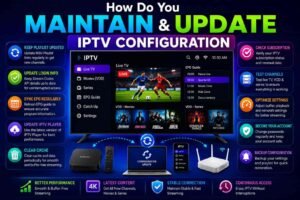
How Do You Maintain and Update IPTV Configuration?
IPTV Configuration Maintenance and Updates involve regularly refreshing your IPTV Subscription, updating IPTV Player software, syncing EPG data, renewing M3U Playlist or Xtream Codes API credentials, and optimizing VOD performance. A proper IPTV Maintenance Guide for Beginners ensures stable streaming quality, fewer buffering issues, and long-term reliable performance across all devices.
In real IPTV environments, setup is only the first step. Based on practical IPTV support experience, long-term performance depends heavily on how well the system is maintained over time. Many users face streaming issues not because of incorrect setup, but because they never update their configuration, playlist links, or application versions.
A complete IPTV Configuration Guide should always include maintenance practices because IPTV services are dynamic—channels change, servers update, playlists expire, and applications evolve. Regular maintenance ensures smooth playback, stable channel loading, and consistent EPG accuracy.
IPTV Maintenance Guide for Beginners
To keep your IPTV system running efficiently:
- Update IPTV applications regularly
- Refresh playlist or login credentials when required
- Sync EPG data frequently
- Clear IPTV Player cache periodically
- Monitor subscription validity
- Test channel performance weekly
- Restart devices occasionally
These basic steps help maintain a stable streaming experience over time.
IPTV Maintenance Checklist for Smooth Streaming
A structured IPTV Maintenance Checklist includes:
Active IPTV Subscription verification
Updated IPTV Player version
Working M3U Playlist or Xtream Codes API
Proper EPG synchronization
Stable Internet Connection
Functional VOD library
Device storage availability
When all elements are maintained properly, streaming interruptions are significantly reduced.
How to Update IPTV Configuration Settings
Updating IPTV settings usually involves:
- Opening your IPTV Player
- Navigating to account or playlist settings
- Updating M3U Playlist or Xtream Codes API details
- Refreshing EPG data
- Saving changes
- Restarting the application
This process ensures that your IPTV system stays aligned with your provider’s latest configuration requirements.
Update M3U Playlist Configuration Settings
When using an M3U Playlist, updates may be required if:
- Playlist URL changes
- Channels are added or removed
- Old links expire
- Provider issues a new playlist version
To update:
- Replace the old URL with the new one
- Refresh the playlist in your IPTV Player
- Clear cache if needed
- Recheck channel loading
In practical usage, M3U playlists often require more manual updates compared to Xtream Codes.
Update Xtream Codes Login Information
For Xtream Codes API users:
- Update username or password if changed
- Verify server URL updates from the provider
- Re-login if authentication fails
- Refresh channel and VOD data
Xtream Codes is generally easier to maintain because most updates sync automatically after login.
IPTV Player Maintenance and Optimization Guide
Your IPTV Player also requires regular optimization:
- Keep the app updated
- Clear cache and temporary files
- Restart the application weekly
- Remove unused playlists
- Adjust playback settings if needed
From real-world IPTV support experience, outdated applications are one of the most common causes of performance issues.
Maintain IPTV Streaming Performance Over Time
To ensure long-term stability:
- Use a reliable Internet Connection
- Avoid overloaded devices
- Keep firmware updated
- Monitor streaming quality regularly
- Restart the router when needed
- Avoid unnecessary configuration changes
A well-maintained IPTV system consistently delivers smoother performance and fewer interruptions.
Long-Term IPTV Configuration Management
For advanced users managing IPTV long-term:
- Keep backup login details
- Document playlist updates
- Track subscription renewal dates
- Monitor device performance trends
- Maintain consistent settings across devices
This helps avoid sudden disruptions and ensures continuous streaming access.
Recommendation
Based on years of IPTV configuration experience, most performance issues appear gradually due to a lack of maintenance rather than initial setup errors. Users who regularly update their IPTV Player, refresh playlists, maintain subscriptions, and monitor EPG and VOD performance consistently experience more stable and reliable streaming across Smart TVs, Android TVs, Firestick devices, and smartphones.
How Often Should You Update IPTV Settings?
You should update IPTV settings whenever your provider changes playlist links, login credentials, or server details, and regularly every few weeks to ensure optimal performance. A proper IPTV Configuration Update Guide helps maintain stable streaming quality and ensures channels, EPG, and VOD data remain accurate.
Many users ask how often IPTV settings should be updated, but the answer depends on usage patterns and provider updates. In real IPTV environments, updates are not always scheduled—they are often triggered by changes in playlists, account details, or application performance.
When to Refresh IPTV Playlist Links
You should refresh your M3U Playlist when:
- Channels stop loadingTheTheThe
- Playlist URL is updated by the provider
- New channels are added
- Existing channels become unavailable
Regular refresh ensures uninterrupted access to updated content.
Update IPTV Configuration for Better Performance
Periodic updates improve:
- Channel loading speed
- EPG accuracy
- Streaming stability
- VOD synchronization
- Overall playback performance
Even when everything is working, small updates can improve long-term reliability.
Maintain Stable IPTV Streaming Quality
For consistent performance:
- Update IPTV Player monthly or as needed
- Check subscription status regularly
- Refresh playlists when required
- Sync EPG weekly or bi-weekly
- Restart devices periodically
These practices ensure stable and efficient IPTV performance.
From practical IPTV maintenance experience, users who update their configuration only when necessary—rather than frequently changing settings—achieve the best long-term stability. A balanced approach that includes regular checks, occasional updates, and consistent monitoring provides the most reliable IPTV experience across all devices, including Smart TV, Firestick, Android TV, Google TV, and smartphones.