What Is IPTV Technology? IPTV (Internet Protocol Television) is a system that delivers live TV channels, movies, series, and on-demand content through internet networks instead of traditional cable or satellite broadcasting. It allows users to stream television content directly on smart TVs, smartphones, computers, and other internet-connected devices.
Unlike traditional cable TV, IPTV does not rely on fixed broadcasting infrastructure. Instead, it uses broadband internet connections and digital streaming systems to provide more flexible, interactive, and device-independent viewing experiences. The growing adoption of IPTV technology is driven by its flexibility, multi-device compatibility, and on-demand content access.
In this article, we will explain what IPTV technology is, how it works, its advantages and limitations, and why it is becoming increasingly popular worldwide.
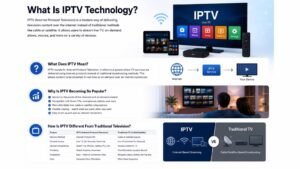
What Is IPTV Technology?
IPTV (Internet Protocol Television) is a system that delivers television content through internet networks instead of traditional cable or satellite broadcasting. It allows users to stream live TV, movies, and on-demand content using an internet connection across smart TVs, mobile devices, streaming boxes, and computers.
According to industry reports from organizations like Statista and Grand View Research, global IPTV adoption continues to grow as users move toward flexible streaming solutions and faster broadband internet access. Many users choose the best IPTV service for HD streaming, live TV channels, and flexible viewing across Smart TVs, Firestick, and Android devices. Understanding IPTV technology is only the first step. To start streaming successfully, follow our complete IPTV Configuration Guide for device setup, playlist integration, EPG configuration, and streaming optimization.
Some common features of Internet Protocol Television include:
- Live TV streaming
- Video on demand (VOD)
- Catch-up TV services
- Multi-device compatibility
- Personalized channel access
- Internet-delivered broadcasting
What Does IPTV Mean?
What does IPTV mean? IPTV stands for Internet Protocol Television. It refers to a television delivery system where video content is streamed through Internet Protocol networks instead of traditional terrestrial, satellite, or cable broadcasting methods.
The IPTV full form explains the core technology behind the service. In simple terms, the meaning of IPTV technology is watching television using an internet connection rather than depending on old broadcasting systems.
Many beginners searching for what does IPTV stands for in streaming often confuse IPTV with platforms like Netflix or YouTube. However, IPTV is a broader delivery technology that can include:
- Live television channels
- Premium sports broadcasting
- On-demand movies
- Recorded programs
- Interactive TV services
Another important point is that Internet Protocolstreaming can work on multiple devices, including:
- Smart TVs
- Android TV boxes
- Smartphones
- Tablets
- PCs and laptops
For users asking what does IPTV mean on smart TV, it usually refers to apps or services that stream television channels directly through the TV’s internet connection without requiring a traditional cable setup.
Why Is IPTV Becoming So Popular?
Why is IPTV becoming so popular? IPTV is growing rapidly because users want more flexibility, lower costs, and better control over what they watch. Many viewers are leaving traditional cable subscriptions and moving toward internet-driven entertainment platforms that offer on-demand access and multi-device streaming.
Millions of users now prefer IPTV because it offers flexible entertainment, multi-device access, and smooth 4K IPTV streaming through Smart TVs, Firestick, and Android TV platforms. Many viewers also test streaming quality using a free IPTV trial before choosing a long-term IPTV subscription.
Instead, people now prefer services that provide:
- Flexible subscription options
- On-demand streaming
- Cross-device viewing
- International channel access
- Personalized content recommendations
This shift has made cable TV replacement solutions much more attractive globally.
Many viewers also believe IPTV provides better content flexibility compared to traditional broadcasting because users can:
- Pause and replay live content
- Access large content libraries
- Stream on multiple screens
- Reduce hardware dependency
This explains why IPTV is growing fast in both developed and emerging digital markets.
How Is IPTV Different From Traditional Television?
IPTV differs from traditional television because it streams TV content through Internet Protocol (IP) networks instead of using cable lines, satellite signals, or terrestrial broadcasting systems. Unlike traditional TV, IPTV allows on-demand streaming, multi-device access, and more interactive viewing features through an internet connection.
Here are some major differences between IPTV and traditional TV:
| Feature | IPTV | Traditional TV |
|---|---|---|
| Delivery Method | Internet Protocol Network | Cable/Satellite Broadcasting |
| Viewing Flexibility | On-demand + Live | Mostly Scheduled |
| Device Compatibility | Multi-device | Mostly TV-based |
| Installation Dependency | Internet connection | Cable or dish setup |
| Interactive Features | Advanced | Limited |
How Does IPTV Technology Work Behind the Scenes?
How does IPTV technology work behind the scenes? IPTV technology works by converting television content into digital data packets and transmitting them through broadband internet networks instead of cable or satellite systems. Behind the scenes, IPTV depends on video encoding, streaming servers, content delivery networks (CDNs), buffering systems, and device decoding to deliver live TV and on-demand video streams in real time.
Unlike traditional broadcasting, IPTV only transmits video content when a user requests a specific channel or stream. This on-demand delivery model improves bandwidth efficiency and allows viewers to watch content across smart TVs, mobile apps, streaming devices, and web platforms. Users looking for a premium IPTV streaming service often prefer platforms with fast channel loading, HD quality, and reliable multi-device support.
How Do IPTV Servers Deliver Live TV Channels?
How do IPTV servers deliver live TV channels? IPTV servers deliver live TV channels by receiving broadcast feeds, converting them into compressed digital video streams, and transmitting them over internet protocol (IP) networks to user devices in real time. Unlike traditional cable broadcasting, IPTV servers only send the specific channel requested by the viewer through internet-based streaming infrastructure.
Behind the scenes, IPTV servers process incoming television feeds through video encoding, compression, stream management, and content delivery systems before distributing them across broadband internet networks.
The IPTV live streaming workflow usually includes:
- Capturing live broadcast feeds
- Video encoding and compression
- Stream processing and server distribution
- CDN-based media delivery
- Device decoding and real-time playback
Modern IPTV platforms also rely on distributed server architecture, cloud load balancing, and Content Delivery Networks (CDNs) to reduce buffering, improve stream stability, and support large numbers of simultaneous viewers worldwide.
How Does IPTV Stream Video Through the Internet?
How does IPTV stream video through the internet? IPTV streams video by converting media content into compressed digital data packets and transmitting them through broadband internet connections in real time. These video packets are delivered over internet protocol (IP) networks to user devices, where they are decoded, buffered, and played instantly as continuous video streams.
Unlike traditional television broadcasting, IPTV only delivers the specific channel or video requested by the user instead of transmitting every channel simultaneously. This improves bandwidth efficiency and reduces unnecessary network traffic.
The IPTV internet streaming process typically includes:
- User requests a channel or video
- IPTV server processes the request
- Video content is encoded and compressed
- Digital data packets are transmitted online
- Device buffers incoming packets
- Real-time playback begins
Modern IPTV streaming systems also rely on advanced media servers, Content Delivery Networks (CDNs), adaptive bitrate streaming, and distributed server infrastructure to improve playback quality and reduce buffering during live video transmission. Platforms like Netflix and YouTube use similar packet-based streaming methods, although IPTV systems are often optimized specifically for live television delivery.
What Happens When You Click an IPTV Channel?
What happens when you click an IPTV channel? When you click an IPTV channel, your IPTV app sends a request to the streaming server, which identifies the selected channel and begins transmitting compressed video data packets through the internet to your device. The device buffers a small portion of the stream before decoding and starting video playback within seconds.
Behind the scenes, several technical processes happen simultaneously:
- User authentication
- Channel source identification
- Stream initialization
- Video packet transmission
- Buffer loading
- Real-time playback
Unlike traditional television broadcasting, IPTV only delivers the specific channel requested by the viewer instead of continuously transmitting every available channel. This makes IPTV streaming more bandwidth-efficient and responsive. The short delay before playback is usually caused by buffering systems that temporarily store incoming video data to maintain smooth streaming if internet speed fluctuates.
Modern IPTV platforms also rely on intelligent server routing, adaptive bitrate streaming, and distributed media servers to reduce startup delay, improve playback quality, and prevent stream interruptions during high traffic periods. If internet bandwidth becomes unstable or servers become overloaded, users may experience lag, freezing, or delayed channel loading.
How Are IPTV Video Streams Encoded and Delivered?
How are IPTV video streams encoded and delivered? IPTV providers encode raw video into compressed digital formats using codecs and transcoding systems before transmitting the streams through internet networks. This process reduces bandwidth usage while maintaining acceptable video quality.
Raw television feeds are extremely large and inefficient for internet streaming. To solve this problem, IPTV systems use video transcoding and compression technologies.
The main goal of IPTV video encoding is to:
- Reduce file size
- Improve transmission speed
- Support HD and 4K playback
- Minimize buffering
- Optimize bandwidth usage
Most IPTV services rely on modern codec standards such as H.264 or H.265. These codecs compress video efficiently while preserving visual quality.
The complete IPTV stream delivery process often includes:
- Video capture
- Compression and encoding
- Multi-resolution transcoding
- Stream segmentation
- Internet delivery
When users search for how video compression works in IPTV, they are usually trying to understand how HD channels can stream smoothly without consuming excessive internet bandwidth.
Compression removes redundant visual information while keeping the video visually consistent for viewers. This is especially important for live sports, fast-motion broadcasts, and high-resolution streaming.
Efficient stream optimization also helps IPTV providers reduce server costs and improve playback performance across different internet conditions.
What Is Adaptive Bitrate Streaming in IPTV?
What is adaptive bitrate streaming in IPTV? Adaptive bitrate streaming in IPTV is a video delivery technology that automatically adjusts stream quality based on internet speed, bandwidth availability, and device performance. It helps IPTV services maintain smooth playback by switching between different video resolutions and bitrates during streaming.
Instead of delivering one fixed-quality video stream, IPTV platforms create multiple versions of the same content at different resolutions, such as:
- 480p
- 720p
- 1080p
- 4K
During playback, the streaming system dynamically switches between these quality levels depending on current network conditions.
For example:
- Fast internet connection → Higher video quality
- Slower internet speed → Lower resolution to reduce buffering
This process is known as dynamic bitrate adaptation and plays a major role in reducing lag, buffering, and playback interruptions during live IPTV streaming.
Adaptive bitrate technology also improves:
- Playback stability
- Bandwidth optimization
- Device compatibility
- Streaming efficiency
Modern IPTV platforms depend heavily on adaptive bitrate streaming because internet speeds often vary between users, devices, and geographic locations.
Without adaptive bitrate technology, HD and 4K IPTV streams would become far more vulnerable to freezing, latency, and unstable playback during peak traffic periods.
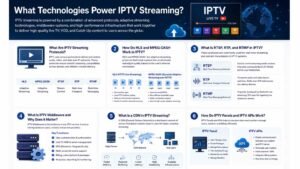
What Technologies Power IPTV Streaming?
What technologies power IPTV streaming? IPTV streaming is powered by a combination of internet protocols, video encoding systems, content delivery networks (CDNs), middleware platforms, streaming servers, and backend APIs. These technologies work together to deliver live TV channels and on-demand video through broadband internet networks with minimal buffering and stable multi-device playback.
Unlike traditional television broadcasting, IPTV relies on layered digital streaming infrastructure where different technologies manage encoding, transmission, authentication, synchronization, and playback optimization.
At a high level, IPTV systems depend on:
- Video encoding and compression
- Streaming protocols
- Media servers
- Content Delivery Networks (CDNs)
- Middleware platforms
- IPTV APIs and control panels
This technology stack enables scalable television over internet delivery across different bandwidth conditions and geographic regions.
What Are IPTV Streaming Protocols?
What are IPTV streaming protocols? IPTV streaming protocols are communication standards that control how video data is transmitted between IPTV servers and user devices over internet networks. These protocols ensure stable playback, synchronized streaming, low transmission delay, and reliable delivery of live TV channels and on-demand video content.
How Do HLS and MPEG-DASH Work in IPTV?
HLS and MPEG-DASH are adaptive streaming protocols that divide video into small media segments and dynamically adjust stream quality based on internet speed and device performance. They help IPTV platforms reduce buffering, improve playback stability, and support HD and 4K streaming across multiple devices.
These are widely used in modern IPTV streaming process systems because they support flexible bitrate switching.
In practical usage:
- HLS is widely supported on Apple ecosystems
- MPEG-DASH is used for open-standard streaming systems
Both technologies improve online TV streaming reliability during fluctuating bandwidth conditions.
What Is RTSP, RTP, and RTMP in IPTV?
RTSP, RTP, and RTMP are real-time streaming protocols used in IPTV systems to control live video transmission, media packet delivery, and low-latency broadcasting between servers and user devices. These protocols help IPTV platforms maintain synchronized live streaming and fast channel delivery across internet networks.
These protocols are commonly used in live streaming television systems where speed matters more than long-term buffering.
Their roles include:
- RTSP → controls playback sessions
- RTP → delivers actual media packets
- RTMP → handles live stream ingestion from sources
In how IPTV servers deliver live channels, these protocols help reduce delay and maintain synchronization during real-time broadcasts. They are widely used in video transmission pipelines for live sports and events.
What Is IPTV Middleware and Why Does It Matter?
IPTV middleware is the software layer that connects users, streaming servers, applications, and subscription systems within an IPTV platform. It manages authentication, channel organization, content access, and device communication to ensure smooth IPTV service operation. Middleware, IPTV server systems cannot properly manage user requests or organize content delivery.
Modern IPTV platforms use middleware systems to manage users, subscriptions, and streaming access efficiently. Businesses looking to launch a premium IPTV streaming service often rely on an advanced IPTV reseller panel for automated customer and package management.
In real-world systems, middleware handles:
- User login and authentication
- Channel organization
- Subscription management
- Device compatibility control
It plays a key role in how IPTV works behind the scenes, ensuring smooth interaction between frontend apps and backend infrastructure. Most IPTV platforms rely on middleware to deliver personalized digital streaming technology experiences.
What Is a CDN in IPTV Streaming?
A CDN (Content Delivery Network) in IPTV is a distributed server network that delivers video content from locations closest to viewers. CDNs improve IPTV streaming speed, reduce buffering, lower latency, and maintain stable HD and 4K playback across different geographic regions.
CDNs are critical for television over internet scalability because they handle millions of simultaneous users efficiently.
In practice, CDN benefits include:
- Faster channel loading
- Reduced latency
- Stable HD streaming
- Better global accessibility
In how IPTV channels are delivered, CDNs act as a bridge between central servers and end users, improving streaming infrastructure performance significantly. This is why large-scale platforms depend heavily on CDN networks for uninterrupted playback.
How Do IPTV Panels and IPTV APIs Work?
IPTV panels and APIs are management systems that help IPTV providers control channels, user accounts, streaming links, subscriptions, and server operations across IPTV platforms. They automate content delivery and simplify large-scale IPTV service management.
In how IPTV streaming works, panels act as dashboards for operators to control:
- Channel activation and removal
- User subscription management
- Stream URL configuration
- Server monitoring
APIs allow external applications to connect with IPTV systems and automate tasks such as login, playback, and content retrieval. Many IPTV server systems depend on APIs to integrate apps across smart TVs, mobile devices, and web players efficiently.
What Are the Main Types of IPTV Services?
What are the main types of IPTV services? The main types of IPTV services include Live IPTV streaming, Video on Demand (VOD), Catch-Up TV, Time-Shifted IPTV, and Pay-Per-View (PPV) streaming. Each IPTV service type is designed for different viewing preferences, content access methods, and streaming behaviors across internet-based television platforms.
Unlike traditional television broadcasting, modern IPTV systems allow users to watch live channels, replay missed programs, stream on-demand content, and purchase premium live events through flexible digital streaming infrastructure.
The most common IPTV categories include:
- Live IPTV streaming
- Video on Demand (VOD)
- Catch-Up TV
- Time-Shifted IPTV
- Pay-Per-View (PPV)
Together, these IPTV service models create a more personalized and flexible television streaming experience across smart TVs, mobile devices, streaming boxes, and web applications.
What Is Live IPTV Streaming?
Live IPTV streaming delivers television channels, sports events, and real-time broadcasts through broadband internet networks instead of traditional cable or satellite systems. Users can watch live content instantly across smart TVs, streaming devices, mobile apps, and IPTV platforms.
Live IPTV services are commonly used for:
- News broadcasting
- Live sports streaming
- Entertainment channels
- International television access
- Real-time event coverage
Unlike traditional broadcasting, live IPTV relies on internet-based stream transmission from IPTV servers directly to user devices using digital streaming protocols. Many users prefer live TV IPTV services because they provide flexible access to sports, breaking news, and global television content without fixed cable subscriptions.
What Is Video on Demand (VOD) in IPTV?
What is VOD in IPTV? Video on Demand (VOD) in IPTV is a streaming feature that allows users to watch movies, TV shows, and recorded programs whenever they choose instead of following fixed television schedules. IPTV VOD content is stored on streaming servers and delivered only when requested by the viewer.
Common VOD content includes:
- Movies
- TV series
- Documentaries
- Recorded programs
- Premium content libraries
What Is Catch-Up TV and Time-Shifted IPTV?
What is Catch-Up TV and Time-Shifted IPTV? Catch-Up TV and Time-Shifted IPTV are streaming features that allow viewers to replay previously aired programs, pause live television, rewind broadcasts, and watch delayed content through IPTV platforms. These features provide more flexible viewing compared to fixed television schedules.
Typical replay features include:
- Replay TV access
- Pause live television
- Rewind broadcasts
- Delayed program viewing
When users search for can you watch previous shows on IPTV, they are usually referring to Catch-Up TV functionality.
What Is PPV (Pay-Per-View) IPTV?
What is PPV in IPTV? PPV IPTV (Pay-Per-View IPTV) is a streaming model where users purchase temporary access to premium live events, sports matches, concerts, or exclusive broadcasts through IPTV platforms. Instead of monthly subscriptions, viewers pay individually for specific content they want to stream. Unlike monthly subscription packages, pay per view streaming charges users only for specific events they choose to watch.
Common PPV IPTV content includes:
- Boxing matches
- MMA events
- Live concerts
- Wrestling events
- Premium sports finals
When users search for how pay per view works on IPTV, the system usually involves purchasing temporary viewing access linked to a user account or streaming device.
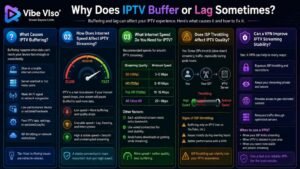
Why Does IPTV Buffer or Lag Sometimes?
Why does IPTV buffer or lag sometimes? IPTV buffering and lag usually happen when video streams cannot reach the user’s device fast enough for continuous playback. Common causes include unstable internet speed, overloaded IPTV servers, network congestion, weak Wi-Fi signals, ISP throttling, poor stream optimization, and device performance limitations.
Unlike traditional cable broadcasting, IPTV depends entirely on real-time internet streaming and continuous packet delivery. Users looking for buffer-free IPTV streaming often choose a premium IPTV streaming service with CDN optimization, stable servers, and high-speed infrastructure for smoother playback across Smart TVs, Firestick, and Android TV devices.
What Causes IPTV Buffering?
What causes IPTV buffering? IPTV buffering happens when video data arrives slower than the media player can process and play it. This causes temporary playback pauses while the device waits for additional stream data from IPTV servers through the internet connection.
Common IPTV buffering causes include:
- Slow internet speed
- Network congestion
- Overloaded IPTV servers
- Weak Wi-Fi signals
- Poor router performance
- Outdated streaming devices
- Inefficient stream optimization
During HD and 4K IPTV streaming, buffering becomes more noticeable because higher-resolution video requires larger and more stable bandwidth capacity. Low-quality IPTV providers often experience more buffering because they rely on weak server infrastructure instead of scalable CDN systems powered by companies like Cloudflare or Akamai Technologies.
How Does Internet Speed Affect IPTV Streaming?
How does internet speed affect IPTV streaming? Internet speed affects how quickly IPTV video streams are downloaded, buffered, and displayed during playback. If available bandwidth becomes unstable or insufficient, users may experience buffering, lag, reduced video quality, or interrupted live streaming. HD and 4K IPTV streams require significantly more bandwidth than standard-definition video because larger video packets must be transmitted continuously in real time.
What Internet Speed Do You Need for IPTV?
What internet speed do you need for IPTV? Most IPTV services require at least 10 Mbps for stable HD streaming, while 4K IPTV streaming and multiple simultaneous streams often require much higher bandwidth capacity. However, stable internet consistency and low network congestion are usually more important than peak speed alone.
Internet requirements also depend on:
- Stream resolution
- Number of connected devices
- Wi-Fi quality
- IPTV server performance
- Network latency
- Home bandwidth congestion
Fiber internet connections generally provide more stable IPTV streaming performance than older DSL or congested wireless networks because they offer lower latency and more consistent bandwidth delivery.
Example:
|
IPTV Quality |
Recommended Speed |
|---|---|
| SD Streaming | 5 Mbps |
| HD Streaming | 10–15 Mbps |
| Full HD Streaming | 20 Mbps |
| 4K IPTV Streaming | 35+ Mbps |
Does ISP Throttling Affect IPTV Quality?
Does ISP throttling affect IPTV quality? Yes, ISP throttling can affect IPTV streaming quality by slowing high-bandwidth video traffic during periods of heavy network usage. Traffic shaping policies may reduce streaming speed, causing buffering, delayed channel loading, lower video quality, and playback interruptions.
Throttling can lead to:
- Increased buffering
- Lower stream quality
- Delayed channel loading
- Playback interruptions
This issue becomes more noticeable during live sports streaming or high-demand events where bandwidth usage spikes significantly.
Can a VPN Improve IPTV Streaming Stability?
Can a VPN improve IPTV streaming stability? In some cases, a VPN can improve IPTV streaming stability by changing network routing paths, bypassing ISP traffic shaping, and improving connection consistency between users and IPTV servers. VPNs encrypt internet traffic and route data through external servers before connecting to streaming platforms.
However, VPNs are not a universal solution. Low-quality VPN servers can also introduce:
- Higher latency
- Slower download speeds
- Additional connection instability
Reliable VPN providers such as NordVPN or ExpressVPN are commonly discussed in streaming communities because of their larger server infrastructure and optimized routing systems. For IPTV users, the best results usually come from combining stable broadband internet, strong router performance, optimized IPTV servers, and efficient streaming protocols rather than relying on VPN usage alone.
5 Responses