How to Fix IPTV Buffering Issues 5 Quick Methods
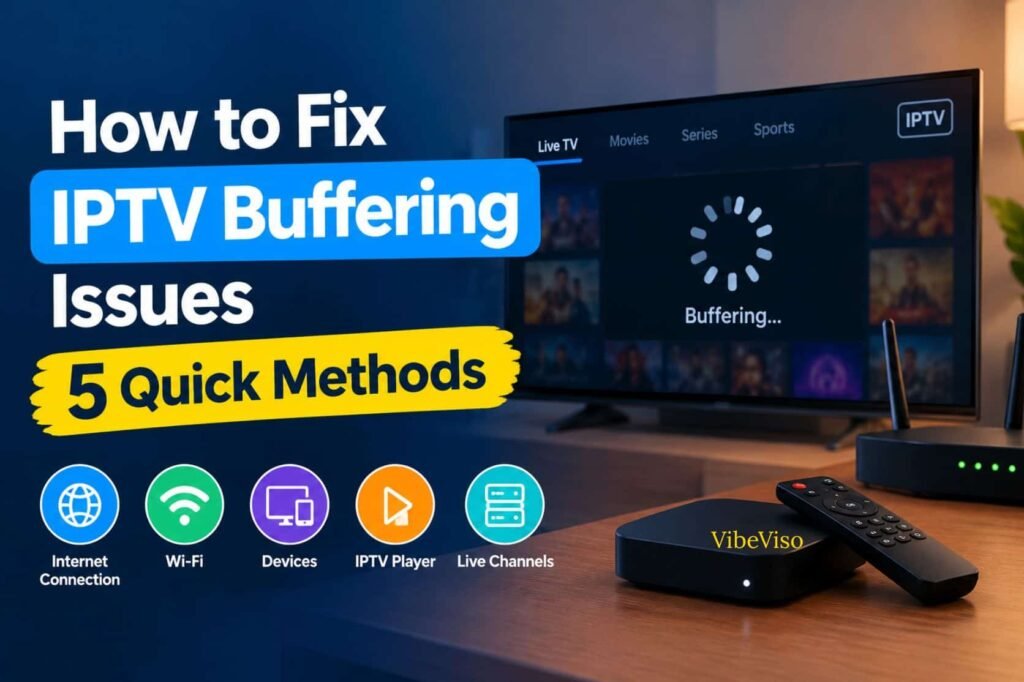
How to Fix IPTV Buffering Issues 5 Quick Methods How to Fix IPTV Buffering Issues 5 Quick Methods by VibeViso IPTV buffering happens when video playback pauses, loads repeatedly, or freezes because the stream is not receiving data consistently enough for continuous playback. Internet connection stability, Wi-Fi performance, streaming devices, IPTV players, and live TV stream delivery can all affect playback. If your IPTV keeps buffering, start by identifying whether the issue is related to your connection, device, player, or the stream itself. In this guide, you’ll learn how to fix IPTV buffering issues at home using five practical troubleshooting methods. These include checking your internet connection, improving network stability, restarting your streaming device and router, reviewing IPTV player and device performance, and determining whether the problem may be related to the IPTV service or specific live TV streams. The quickest approach is to test one factor at a time rather than changing multiple settings simultaneously. This helps you identify the actual source of the IPTV buffering issue and choose the appropriate fix without making unnecessary changes to your setup. What You’ll Learn What IPTV buffering is and why it can interrupt live TV streaming How to identify whether buffering is related to your internet connection How to improve network stability when IPTV keeps buffering How your streaming device and IPTV player can affect playback Five practical methods to fix IPTV buffering issues at home How to determine whether the problem may be related to the IPTV service or a specific live TV stream Why Does Your IPTV Keep Buffering While Watching TV? IPTV keeps buffering when the video stream cannot consistently deliver enough data for smooth playback. Common factors include an unstable internet connection, Wi-Fi interference, network congestion, device performance, IPTV player behavior, or problems affecting the streaming server or particular channel. A fast connection alone does not guarantee uninterrupted streaming. When IPTV buffering problems happen repeatedly, identify whether the issue occurs on one channel, all channels, one device, or multiple devices. Testing the same stream on another supported device or connection can help separate a local streaming device or network problem from a broader streaming issue. Common factors to check: Internet bandwidth: Other devices using the same connection can reduce the bandwidth available to your IPTV stream. Wi-Fi: Distance, interference, or a weak wireless connection can affect playback stability. Latency and jitter: Changes in network delivery can make continuous live playback more difficult. Packet loss: Lost or interrupted data can affect the stream reaching your device consistently. IPTV player: Player or device-related issues can affect playback even when the network itself appears usable. Streaming server or channel source: If only particular channels experience problems while others play normally, the issue may not be your home connection. What Causes IPTV Buffering During Live TV Streaming? IPTV buffering issues occur when the streaming data reaching the IPTV player is not arriving consistently enough to maintain playback. During live TV, the player receives a continuous stream of video data and maintains a temporary buffer to help absorb normal variations in delivery. If incoming data falls behind what the player needs, playback can pause or freeze. A useful way to understand IPTV streaming issues is to separate the process into three parts: the stream source sends data, the network transports that data, and the streaming device and player receive and decode it. A problem in any of these areas can affect playback. The main areas to check are: Network stability: An unstable Wi-Fi or internet connection can interrupt the continuous delivery of streaming data.Available bandwidth: Other devices or activities on the same network can reduce the bandwidth available to the streaming device.Streaming device: Device performance or connectivity can affect how reliably the IPTV player receives and processes the stream.IPTV player: Player compatibility, configuration, or playback behavior can contribute to interruptions.Stream source: If a specific live channel repeatedly buffers while other channels play normally, the problem may be associated with that particular stream or source. For this reason, how to stop IPTV buffering during live channels is not always a matter of increasing internet speed. Testing the connection, device, player, and affected streams separately gives you a clearer way to identify the actual source of the problem. Why Does IPTV Buffer Even With Good Internet Speed? IPTV buffering with fast internet connection can still happen because download speed is only one part of streaming performance. Latency, jitter, packet loss, Wi-Fi signal quality, network congestion, available bandwidth, device performance, and the stream itself can affect playback. Live streaming can experience interruptions even when the connection appears capable of sustaining the average streaming bitrate. For example, a speed test may show a high download speed while the streaming device is receiving an inconsistent Wi-Fi connection. Similarly, other devices using the same network can consume available bandwidth, leaving less capacity for IPTV streaming. Why good speed may not be enough: Download speed: Shows how quickly data can generally be downloaded, but does not describe every aspect of connection quality.Latency: Measures the delay involved in data communication and can affect real-time applications.Jitter: Variations in network timing can make continuous data delivery less consistent.Packet loss: Missing data packets may interrupt the stream.Wi-Fi signal: A weak or interfered wireless connection can reduce practical performance at the TV or streaming device.Bandwidth usage: Multiple devices streaming, downloading, gaming, or performing other network-intensive activities can compete for available capacity. To investigate why IPTV buffers on high speed internet, run a speed test on or immediately beside the device you use for streaming, rather than relying only on the speed advertised by your internet provider. Testing at the TV location can reveal differences caused by Wi-Fi range or interference. You can also temporarily reduce activity from other devices and compare playback. So, IPTV freezing despite good download speed does not automatically indicate that your internet package is too slow. The goal is to determine whether the limitation is speed, stability, Wi-Fi, device performance, or the stream itself. Does IPTV Buffering Always Come From the Provider?
Why Canadians Are Switching to IPTV Canada 2026 | VIbe Viso
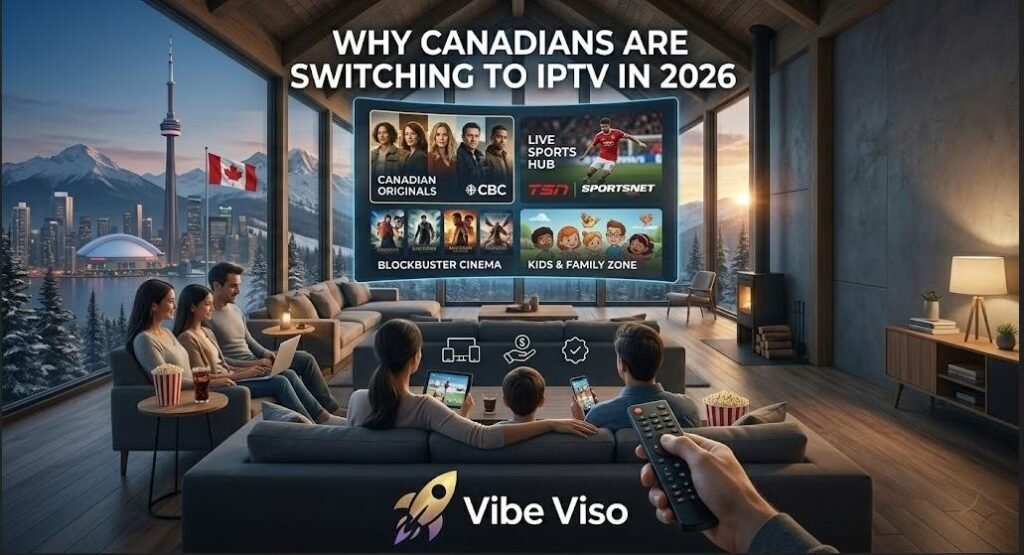
Why Canadians Are Switching to IPTV in 2026 ? IPTV Canada has become one of the fastest-growing entertainment solutions as more Canadians move away from traditional cable television and switch to internet-based streaming services. IPTV (Internet Protocol Television) allows users to stream live TV channels, sports, movies, series, and on-demand content directly through internet connections instead of traditional cable or satellite broadcasting systems. Unlike traditional television providers, IPTV Canada services offer more flexibility, better content access, and multi-device compatibility for modern viewers. Users can watch IPTV on Smart TVs, Firestick devices, Android boxes, smartphones, tablets, and computers without depending on expensive cable infrastructure or long-term contracts. In this article, we will explain why Canadians are switching to IPTV Canada, how IPTV works, the benefits of IPTV over cable TV, and why IPTV streaming continues growing rapidly across Canada in 2026. Why Canadians Are Moving Away From Cable TV | Vibe Viso IPTV Canada has become one of the fastest-growing entertainment trends as more households move away from traditional cable television and switch to modern internet-based streaming solutions. At Vibe Viso, we have seen a major increase in users exploring IPTV as a flexible and affordable way to access live TV, sports, movies, and on-demand content without the limitations of cable subscriptions. IPTV (Internet Protocol Television) delivers television content through internet networks instead of satellite or cable infrastructure. This allows users to stream live channels, sports events, and entertainment content directly on Smart TVs, Firestick devices, Android boxes, smartphones, tablets, and computers with far greater flexibility. Unlike traditional television services, IPTV Canada platforms offer: Multi-device streaming support Access to international and premium channels HD and 4K playback quality Faster channel switching and on-demand content No long-term cable contracts Modern IPTV technology allows users to stream: Live TV channels Sports broadcasting Movies and TV shows International channels Video on demand content with fast loading speeds and stable playback performance. At the same time, IPTV Canada services continue improving with: Better IPTV server infrastructure No buffering streaming technology Low latency playback Multi-device compatibility Advanced anti-freeze systems As a result, more Canadians are switching to IPTV in 2026 for a better home entertainment experience. What is IPTV and Why Is It Growing Rapidly in Canada? IPTV stands for Internet Protocol Television. Instead of using traditional satellite systems or cable lines, IPTV technology delivers television content directly through the internet. This allows users to stream: Live television Sports channels Entertainment networks On-demand movies TV series across multiple devices with better flexibility and faster access. Unlike traditional cable TV, IPTV provides users with more control over how and where they watch content. Therefore, modern viewers now prefer IPTV streaming because it combines live television and digital streaming inside one entertainment platform. Moreover, IPTV Canada systems now support: HD streaming Full HD channels Ultra HD content 4K IPTV streaming Adaptive bitrate technology which improves overall viewing quality significantly. Related reading : What Is IPTV Technology? Why IPTV is becoming more popular in Canada The demand for IPTV Canada continues increasing because users want affordable and flexible entertainment without depending on outdated cable systems. Many Canadian households now search for: Affordable IPTV Canada Best IPTV Canada No buffering IPTV Canada IPTV for sports Canada IPTV subscription Canada because traditional cable pricing continues rising every year. At the same time, faster internet infrastructure across Canada has improved IPTV streaming quality dramatically. Therefore, users can now enjoy smoother playback, sharper video quality, and faster channel loading speeds across all major devices. Moreover, IPTV provides: More channels Better sports access International entertainment Flexible streaming Lower monthly costs compared to traditional television providers. Related guide: How to Install IPTV in Toronto Canada Difference Between IPTV and Traditional Cable TV Traditional cable television relies on fixed broadcasting infrastructure, where content is delivered through satellite or wired cable networks. This system limits flexibility, requires hardware installation, and often comes with long-term subscription contracts that restrict user control over content and pricing. IPTV Canada, on the other hand, delivers television content through internet-based streaming technology. Instead of depending on physical broadcasting systems, IPTV uses broadband internet to stream live TV channels, movies, sports, and on-demand content directly to users’ devices. This makes IPTV significantly more flexible, allowing viewers to watch content on Smart TVs, Firestick devices, smartphones, tablets, and computers without being tied to a single location or cable box. As a result, many Canadians now consider IPTV a more practical and affordable alternative to traditional television subscriptions. To understand the technology behind this system in more detail, you can also refer to our guide on what IPTV technology ?, where we break down the streaming infrastructure in a simple and practical way. IPTV Canada Offers More Content With Less Restriction Another major reason IPTV is growing in Canada is the significant increase in content variety. Traditional cable services often divide channels into separate packages, forcing users to pay extra for sports, movies, or international programming. IPTV eliminates this structure by combining a large variety of content into a single platform. With IPTV Canada services, users can access live Canadian channels, international networks, sports broadcasts, and on-demand entertainment without switching between multiple subscriptions. This makes IPTV especially appealing for multicultural households in Canada who want access to global content in one place. The flexibility of IPTV also extends to device usage. Users are no longer restricted to a single television in their living room. Instead, they can stream content across multiple screens, making it easier for families to share one subscription across different devices. Why Canadians Are Cutting the Cord in 2026 One of the biggest reasons IPTV is growing rapidly in Canada is the increasing frustration with traditional cable pricing. Many households now pay well over $100 per month for cable packages that still require additional payments for sports channels, premium movies, and international content. Modern viewers no longer want expensive long-term television contracts that limit flexibility. Instead, they want entertainment systems that provide instant access, broader content libraries, and better streaming convenience.
What is IPTV Technology? Complete Guide | Vibe Viso

What Is IPTV Technology? IPTV (Internet Protocol Television) is a system that delivers live TV channels, movies, series, and on-demand content through internet networks instead of traditional cable or satellite broadcasting. It allows users to stream television content directly on smart TVs, smartphones, computers, and other internet-connected devices. Unlike traditional cable TV, IPTV does not rely on fixed broadcasting infrastructure. Instead, it uses broadband internet connections and digital streaming systems to provide more flexible, interactive, and device-independent viewing experiences. The growing adoption of IPTV technology is driven by its flexibility, multi-device compatibility, and on-demand content access. In this article, we will explain what IPTV technology is, how it works, its advantages and limitations, and why it is becoming increasingly popular worldwide. What Is IPTV Technology? IPTV (Internet Protocol Television) is a system that delivers television content through internet networks instead of traditional cable or satellite broadcasting. It allows users to stream live TV, movies, and on-demand content using an internet connection across smart TVs, mobile devices, streaming boxes, and computers. According to industry reports from organizations like Statista and Grand View Research, global IPTV adoption continues to grow as users move toward flexible streaming solutions and faster broadband internet access. Many users choose the best IPTV service for HD streaming, live TV channels, and flexible viewing across Smart TVs, Firestick, and Android devices. Understanding IPTV technology is only the first step. To start streaming successfully, follow our complete IPTV Configuration Guide for device setup, playlist integration, EPG configuration, and streaming optimization. Some common features of Internet Protocol Television include: Live TV streaming Video on demand (VOD) Catch-up TV services Multi-device compatibility Personalized channel access Internet-delivered broadcasting What Does IPTV Mean? What does IPTV mean? IPTV stands for Internet Protocol Television. It refers to a television delivery system where video content is streamed through Internet Protocol networks instead of traditional terrestrial, satellite, or cable broadcasting methods. The IPTV full form explains the core technology behind the service. In simple terms, the meaning of IPTV technology is watching television using an internet connection rather than depending on old broadcasting systems. Many beginners searching for what does IPTV stands for in streaming often confuse IPTV with platforms like Netflix or YouTube. However, IPTV is a broader delivery technology that can include: Live television channels Premium sports broadcasting On-demand movies Recorded programs Interactive TV services Another important point is that Internet Protocolstreaming can work on multiple devices, including: Smart TVs Android TV boxes Smartphones Tablets PCs and laptops For users asking what does IPTV mean on smart TV, it usually refers to apps or services that stream television channels directly through the TV’s internet connection without requiring a traditional cable setup. Why Is IPTV Becoming So Popular? Why is IPTV becoming so popular? IPTV is growing rapidly because users want more flexibility, lower costs, and better control over what they watch. Many viewers are leaving traditional cable subscriptions and moving toward internet-driven entertainment platforms that offer on-demand access and multi-device streaming. Millions of users now prefer IPTV because it offers flexible entertainment, multi-device access, and smooth 4K IPTV streaming through Smart TVs, Firestick, and Android TV platforms. Many viewers also test streaming quality using a free IPTV trial before choosing a long-term IPTV subscription. Instead, people now prefer services that provide: Flexible subscription options On-demand streaming Cross-device viewing International channel access Personalized content recommendations This shift has made cable TV replacement solutions much more attractive globally. Many viewers also believe IPTV provides better content flexibility compared to traditional broadcasting because users can: Pause and replay live content Access large content libraries Stream on multiple screens Reduce hardware dependency This explains why IPTV is growing fast in both developed and emerging digital markets. How Is IPTV Different From Traditional Television? IPTV differs from traditional television because it streams TV content through Internet Protocol (IP) networks instead of using cable lines, satellite signals, or terrestrial broadcasting systems. Unlike traditional TV, IPTV allows on-demand streaming, multi-device access, and more interactive viewing features through an internet connection. Here are some major differences between IPTV and traditional TV: Feature IPTV Traditional TV Delivery Method Internet Protocol Network Cable/Satellite Broadcasting Viewing Flexibility On-demand + Live Mostly Scheduled Device Compatibility Multi-device Mostly TV-based Installation Dependency Internet connection Cable or dish setup Interactive Features Advanced Limited How Does IPTV Technology Work Behind the Scenes? How does IPTV technology work behind the scenes? IPTV technology works by converting television content into digital data packets and transmitting them through broadband internet networks instead of cable or satellite systems. Behind the scenes, IPTV depends on video encoding, streaming servers, content delivery networks (CDNs), buffering systems, and device decoding to deliver live TV and on-demand video streams in real time. Unlike traditional broadcasting, IPTV only transmits video content when a user requests a specific channel or stream. This on-demand delivery model improves bandwidth efficiency and allows viewers to watch content across smart TVs, mobile apps, streaming devices, and web platforms. Users looking for a premium IPTV streaming service often prefer platforms with fast channel loading, HD quality, and reliable multi-device support. How Do IPTV Servers Deliver Live TV Channels? How do IPTV servers deliver live TV channels? IPTV servers deliver live TV channels by receiving broadcast feeds, converting them into compressed digital video streams, and transmitting them over internet protocol (IP) networks to user devices in real time. Unlike traditional cable broadcasting, IPTV servers only send the specific channel requested by the viewer through internet-based streaming infrastructure. Behind the scenes, IPTV servers process incoming television feeds through video encoding, compression, stream management, and content delivery systems before distributing them across broadband internet networks. The IPTV live streaming workflow usually includes: Capturing live broadcast feeds Video encoding and compression Stream processing and server distribution CDN-based media delivery Device decoding and real-time playback Modern IPTV platforms also rely on distributed server architecture, cloud load balancing, and Content Delivery Networks (CDNs) to reduce buffering, improve stream stability, and support large numbers of simultaneous viewers worldwide. How Does IPTV Stream Video