
How IPTV Calgary NHL Streaming Works — and Why Cord-Cutters Are Switching
Finding a reliable IPTV Calgary NHL streaming solution has become the number-one priority for Flames fans who are done paying 130–160 per month for cable packages that still black out the games they actually want to watch. Cord-cutting in Calgary is no longer experimental — it is the default choice for a growing segment of Southern Alberta sports households.
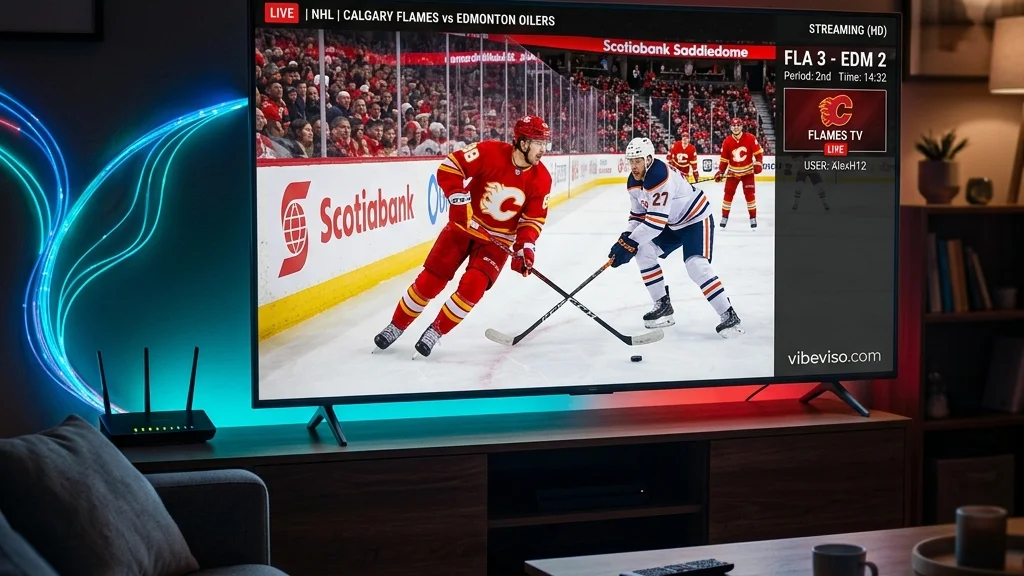
Traditional cable and satellite providers like Shaw (now Rogers Xfinity) and TELUS Optik lock subscribers into annual contracts with bundled channel tiers. Even after paying for the highest sports tiers, Sportsnet’s regional blackout rules mean that Flames fans in their own city are blocked from streaming playoff games when national rights holders take over the broadcast feed. This paradox — where paying more gives you less — is what drives tens of thousands of Calgarians toward IPTV (Internet Protocol Television) every year.
IPTV works by delivering live television channels over a high-speed internet connection rather than through a cable or satellite signal. The service uses M3U playlist files or Xtream Codes APIs to connect your streaming device directly to a server network that captures and redistributes broadcast feeds in real-time. Because IPTV operates independently of regional cable infrastructure, it is not bound by the same geofencing rules that restrict Sportsnet, TSN, and Sports broadcast licenses to specific territorial zones.
For Calgary Flames fans specifically, the advantages are immediate:
- No blackout screens during regional divisional matchups
- Access to all Sportsnet regional feeds (West, Pacific, Ontario, East) simultaneously
- TSN 1–5 coverage of national matchups and playoff games
- US national feeds including ESPN, Turner Sports (TNT/TBS), and ESPN+
- International hockey networks including NHLTV-equivalent feeds from Europe and Asia
- Amazon Prime Video Monday Night Hockey equivalents for the 2026–27 season
To get started, you need three things: a reliable Calgary ISP with at least 25 Mbps dedicated bandwidth, a compatible streaming device, and a quality IPTV subscription. Our breakdown of the best internet plans for IPTV in Calgary covers which ISPs — TELUS, Rogers Xfinity, and Moby Fiber — actually deliver the stable low-latency connections that live sports streaming demands. Once your network is optimized, the complete IPTV setup guide for Calgary walks you through device selection, app installation, and playlist import from start to finish.
The national context is shifting rapidly. For data on how Canadian cord-cutting is accelerating across all provinces, see why Canadians are switching to IPTV. Calgary leads Western Canada in IPTV adoption rates, driven by the combination of strong fiber infrastructure and one of the highest concentrations of sports-watching households in the country.
Sportsnet West Blackout Rules: What Calgary Flames Fans Actually Face
For hockey fans in Alberta, understanding how broadcasting rights create blackout walls is essential before you can effectively bypass them. The NHL’s regional broadcasting system divides Canada into exclusive territorial zones, each licensed to a specific rights holder. The Calgary Flames‘ regional rights are owned by Rogers Sportsnet, which broadcasts home and away games on the Sportsnet West channel. This exclusivity zone covers Alberta, Saskatchewan, the Northwest Territories, and Nunavut.
The blackout problem works in two directions:
Scenario 1 — The Traveling Fan: You live in Calgary but are physically visiting British Columbia for a week. Your IP address places you outside the Sportsnet West zone. You are blocked from watching your Flames game on Sportsnet+ even though you pay for the premium subscription. The service sees a BC IP and routes you to the Canucks regional feed instead.
Scenario 2 — The Out-of-Market Fan: You are a lifelong Flames fan living in Toronto, Ottawa, or Vancouver. Sportsnet West’s license prohibits it from serving those markets. You cannot watch regional Flames broadcasts through standard cable without paying for expensive out-of-market sports packages.
Scenario 3 — The National Broadcast Blackout: Even in Calgary, when a Flames game is picked up for national broadcast, Sportsnet West is required to black out its regional feed. Viewers see the national broadcast instead — which may have different commentary, camera angles, and pre-game coverage.
The CRTC (Canadian Radio-television and Telecommunications Commission) governs these simultaneous substitution and blackout rules under Canadian broadcast law. The system was designed to protect local broadcaster revenue, but its effect on digital consumers is fragmented, frustrating access.
What the Sportsnet+ Packages Actually Cost
The official digital streaming options in Canada for 2026–27 are:
| Streaming Package | Monthly Cost (CAD) | Blackout Restrictions | Coverage |
|---|---|---|---|
| Sportsnet+ Standard | $19.99/month | Local regional games only; out-of-market blacked out | In-market Flames games |
| Sportsnet+ Premium | $34.99/month | Local blackouts still apply during national broadcasts | In-market + out-of-market NHL |
| Amazon Prime Video | $9.99/month | Monday Night Hockey only (2026–27+) | Select Monday night national games |
| Vibe Viso IPTV | 15–22/month | None — all regional and global feeds included | Complete NHL + sports + international |
The CBC Broadcast Shift You Need to Know About
A critical change took effect after the 2025–26 NHL playoffs: the Rogers–CBC sub-licensing agreement that had placed Hockey Night in Canada on CBC since 1952 was not renewed. Starting with the 2026–27 season:
- CBC no longer broadcasts any NHL games — not Saturday night national games, not playoff games, not the Stanley Cup Finals
- All national rights belong exclusively to Rogers Sportsnet and its digital platforms
- Monday Night Hockey has moved to Amazon Prime Video under a new exclusive deal
- Fans who relied on free over-the-air CBC hockey broadcasts must now subscribe to Sportsnet+ or Amazon Prime Video
This change has accelerated IPTV adoption among budget-conscious Calgary hockey fans who previously watched Saturday night games for free on CBC. IPTV services like Vibe Viso consolidate all of these newly fragmented rights — Sportsnet West, all national Sportsnet feeds, TSN 1–5, Amazon Prime Video NHL equivalents, and international feeds — into a single playlist. For a national comparison of IPTV coverage across Canada, see our IPTV services across Canada hub.
French-Language Feeds: RDS and TVA Sports for Bilingual Calgary Households
For bilingual sports fans in Southern Alberta, the rights fragmentation extends to French-language broadcasting. Regional French-language coverage of the Montreal Canadiens and Ottawa Senators is exclusively licensed to RDS (Réseau des sports), while national French broadcasts belong to TVA Sports.
Accessing these feeds from Calgary through standard cable requires an expensive French-language sports add-on tier — typically 15–30 per month on top of existing Sportsnet subscriptions. A premium IPTV package consolidates RDS (RDS, RDS2, RDS Info) and TVA Sports (TVA Sports 1, TVA Sports 2) into the same playlist, with full EPG synchronization, at no additional cost.
WireGuard VPN Setup on Firestick for Geofence Evasion
While IPTV packages provide access to global sports channels independently of regional geofencing, routing your streaming traffic through a Virtual Private Network (VPN) adds two critical advantages:
- ISP Traffic Shaping Prevention: Rogers Xfinity and TELUS both use Deep Packet Inspection (DPI) to identify and throttle high-bandwidth live streaming traffic during peak hours. A VPN encrypts your traffic, masking its content from your ISP’s DPI systems and preventing throttling.
- Geofence Bypass: By connecting to a VPN node in Toronto or Vancouver, your IP address is replaced with one from outside the Sportsnet West blackout zone, giving you access to feeds restricted to other regional markets.
The Amazon Fire TV Stick is the most popular IPTV hardware platform in Calgary households, combining low cost (typically 49–99 CAD), broad app support, and a clean remote interface. For a complete device setup guide, see our IPTV on Firestick Canada installation guide.
Why WireGuard Outperforms OpenVPN for Live Sports
Most VPN providers offer multiple protocol options. For NHL live streaming specifically, WireGuard is the clear choice over OpenVPN or IKEv2:
| Protocol | Latency Overhead | CPU Load | Connection Speed | Recommended? |
|---|---|---|---|---|
| WireGuard | ~2ms | Very Low | ~500 Mbps+ | ✅ Yes — ideal for 4K live sports |
| IKEv2/IPsec | ~5ms | Medium | ~200 Mbps | Acceptable |
| OpenVPN (UDP) | ~10–20ms | High | ~100 Mbps | ❌ No — too much overhead for 4K |
| OpenVPN (TCP) | ~30ms+ | Very High | ~50 Mbps | ❌ No — causes stutter on live feeds |
WireGuard’s lightweight cryptographic design (using ChaCha20, Poly1305, and Curve25519) means it adds virtually no overhead to your stream. On a Firestick 4K Max, WireGuard sustains throughputs well above what a 4K live stream (typically 25 Mbps) requires, even when paired with a 100 Mbps Ethernet connection.
Step-by-Step: Installing WireGuard on Amazon Firestick
- Enable Sideloading: Navigate to Settings > My Fire TV > Developer Options and toggle Apps from Unknown Sources to ON for your preferred file manager (Downloader or File Commander).
- Install Downloader: If you haven’t already, search for “Downloader” in the Firestick App Store and install it. This app allows you to sideload APK files.
- Download WireGuard APK: Open Downloader and enter the direct URL for the latest WireGuard Android APK. The download takes 10–20 seconds on a standard Calgary broadband connection.
- Install the Application: After download, select Install when prompted. Once complete, press Open to launch WireGuard.
- Import Your VPN Configuration: Your VPN provider will supply either a
.conffile or a QR code. In WireGuard, tap the + button and choose Scan from QR Code or Import from File. Import your configuration from your VPN provider’s dashboard. - Select a Low-Latency Node: For bypassing Sportsnet West geofences, connect to a Toronto or Vancouver node. This places your virtual IP address outside of Alberta, allowing you to access the Sportsnet Ontario or Sportsnet Pacific feeds for the same Flames game.
- Activate the Tunnel: Tap the toggle next to your configuration name. WireGuard will establish the connection in under 1 second.
Optimizing TiviMate for Live NHL Streams
Even with WireGuard running efficiently, encrypted traffic can introduce minor jitter — momentary packet delivery delays that cause brief stutters on live feeds. TiviMate’s client-side buffer controls let you pre-cache seconds of video data in local memory, absorbing these fluctuations transparently.
For Calgary NHL streaming specifically, we recommend the following TiviMate settings:
- Open TiviMate and press the Menu button to open the sidebar.
- Go to Settings > Player.
- Set Video Player to ExoPlayer (preferred for Firestick hardware acceleration).
- Open Settings > Playback and locate Buffer Size.
- Change Buffer Size from Normal to Large (5 seconds) or Very Large (10 seconds). The 10-second buffer is optimal for 4K NHL feeds during peak viewing hours when Calgary ISP networks are under load.
- Under Catch-Up, enable the feature if your IPTV provider supports timeshift — this allows you to rewind live Flames broadcasts by up to 3 hours.
Other strong IPTV player alternatives include IPTV Smarters Pro for a web-style navigation interface, and OTT Navigator for handling large playlists (10,000+ channels) more efficiently than TiviMate on entry-level Firestick hardware. You can also try a free IPTV trial to test stream quality on your specific hardware before committing to a subscription.
Network Optimization for Buffer-Free Calgary NHL Streaming
Streaming a live Flames game at 4K 60fps places sustained demands on your home network that typical web browsing or even Netflix 4K viewing does not. Live sports streams cannot buffer ahead the way on-demand content does — every packet must arrive on schedule or the video freezes. Calgary’s residential internet landscape, dominated by TELUS PureFibre and Rogers Xfinity, offers very different performance profiles for live sports workloads.
For a comprehensive ISP comparison with actual latency and jitter benchmarks, see the full best internet for IPTV Calgary guide — it includes speed tier recommendations, ISP-specific router configuration steps, and Flames playoff-night performance data.
TELUS PureFibre vs. Rogers Xfinity: Calgary ISP Performance for Live Sports
TELUS PureFibre XGS-PON uses a Fiber-to-the-Home (FTTH) architecture that delivers symmetrical upload and download speeds. For live sports streaming, symmetrical fiber solves a problem that coaxial cable cannot: upload congestion. Your streaming device continuously sends TCP acknowledgement packets (ACK packets) back to the IPTV server confirming receipt of each video chunk. On a congested upload connection, these ACK packets are delayed — causing the server to reduce its send rate, which directly causes buffering on your end. TELUS PureFibre eliminates this by guaranteeing equal upload bandwidth.
Rogers Xfinity (Shaw HFC) operates the legacy Shaw Hybrid Fiber-Coaxial network across most Calgary residential neighborhoods. While download speeds are competitive, upload bandwidth is asymmetrical (typically 50–150 Mbps on legacy plans) and coaxial segments are shared within neighborhood nodes. During a major Flames playoff broadcast, when every household in your Rogers node is streaming simultaneously, bandwidth contention causes bufferbloat — where router packet queues overflow, driving latency from a baseline 15ms up to 200ms+ and causing packet loss and stream freezes.
Rogers Xfinity Pro (4 Gbps / 1 Gbps): Rogers has deployed a new top-tier plan in Calgary on DOCSIS 3.1 infrastructure paired with a WiFi 7 (802.11be) gateway. WiFi 7’s multi-link operation (MLO) and 320 MHz channel widths dramatically reduce Wi-Fi layer congestion in high-density Calgary inner-city neighborhoods like the Beltline, Eau Claire, Mission, and Kensington. If you are streaming multiple 4K IPTV feeds across several TVs simultaneously during a Flames playoff night, the Xfinity Pro plan eliminates the local node congestion that plagues standard coaxial tiers.
Moby Fiber operates dedicated gigabit fiber in Downtown Calgary and Beltline condo buildings and peers directly at YYCIX (the Calgary Internet Exchange), offering the lowest round-trip times of any residential ISP in the city for streaming services with Canadian server presence.
YYCIX vs. VANIX: Why Your ISP’s Peering Partner Matters for Streaming
The path your packets take from Calgary to the IPTV server infrastructure determines your stream stability more than raw download speed in many cases.
- YYCIX Peering (TELUS, Moby Fiber): The Calgary Internet Exchange (YYCIX) interconnects local networks directly. Traffic between a TELUS residential line and an IPTV server present at YYCIX completes a round-trip in under 2ms. This is as close to zero latency as residential internet gets.
- VANIX Routing (Rogers Xfinity): Rogers does not peer at YYCIX. All Calgary Rogers traffic is backhauled to the Vancouver Internet Exchange (VANIX) or transited through Seattle before connecting to external networks. This routing adds 10–15 hops to every request, raising round-trip times to 25–35ms under normal load — and far higher during peak playoff hours when intermediate network nodes become congested.
Router Configuration Steps for Calgary Streaming Households
Apply these adjustments regardless of your ISP to maximize stream stability:
- Wired Ethernet First: Connect your Firestick or Android TV box to your router using a shielded CAT6 or CAT7 Ethernet cable. In dense Calgary neighborhoods like the Beltline and Eau Claire, 2.4 GHz and 5 GHz Wi-Fi bands are extremely congested. A wired connection eliminates this variable entirely.
- Enable Smart Queue Management (SQM): Routers running OpenWrt, DD-WRT, or Asus Merlin firmware support SQM with FQ-CoDel or CAKE algorithms. Enable SQM and set rate limits to 90% of your subscribed speed. This prevents bufferbloat by ensuring that large downloads (game updates, backups) cannot monopolize the connection and delay your live IPTV packets.
- Replace ISP DNS: Your ISP’s default DNS resolver adds unnecessary latency to every new stream segment request. Replace it with Cloudflare DNS (
1.1.1.1/1.0.0.1) or Google Public DNS (8.8.8.8/8.8.4.4). This cuts DNS lookup time from 20–50ms to under 5ms. - Enable IPv6 if Supported: IPTV servers with IPv6 presence route more efficiently, bypassing IPv4 NAT translation layers. TELUS PureFibre and Rogers Xfinity Pro both support dual-stack IPv6 — enable it in your router’s WAN settings.
- QoS Priority Rule: If your router supports Quality of Service (QoS) traffic prioritization, create a rule that assigns your Firestick’s MAC address the highest priority class. This ensures that live stream packets are processed before lower-priority household traffic (smart home devices, security cameras, general web browsing).
IPTV App Comparison: Best Streaming Clients for Calgary Flames Fans
The choice of IPTV media player significantly affects your experience watching live NHL games. Calgary IPTV users have three primary app options, each with distinct strengths:
TiviMate Premium — Best for EPG and Live Sports Navigation
TiviMate is the dominant IPTV player in Calgary’s cord-cutter community. Its grid-based Electronic Program Guide (EPG) closely resembles the traditional cable guide that long-time Shaw and TELUS Optik subscribers are familiar with, making the transition to IPTV far less disorienting.
Key TiviMate features for NHL streaming:
- Multi-view mode: Watch up to four live games simultaneously on screen — ideal for playoff rounds with multiple Flames-relevant matchups
- Catchup/Timeshift: Rewind live Flames broadcasts by up to 3 hours (provider-dependent)
- Client-side buffer control: The single most important setting for live sports stability
- Playlist management: Store multiple IPTV provider playlists and switch between them instantly
- Parental controls and favorites: Organize your channels so Sportsnet West and TSN feeds appear first
TiviMate Premium costs approximately $5 CAD/year for the premium unlock, making it the highest-value investment in your IPTV setup by a wide margin.
IPTV Smarters Pro — Best for Multi-Device Households
IPTV Smarters Pro takes a different interface approach, presenting your channel list in a web-app style with profile management for multiple users. This is ideal for households where adults and children all use the same IPTV account but want different favorited channel lists and parental restrictions.
Smarters Pro supports Xtream Codes API, M3U playlists, and multi-screen viewing, and performs reliably on both Firestick and Android TV hardware.
OTT Navigator — Best for Large Playlists
If your IPTV subscription includes 10,000+ channels and multiple VOD libraries, OTT Navigator handles large playlist files more efficiently than TiviMate on entry-level Firestick hardware. Its interface is less polished, but it is significantly more stable when loading and refreshing large channel databases during live events.
Calgary NHL Streaming Devices: Which Hardware Works Best in 2026
The device you stream on affects picture quality, app compatibility, and remote control ease:
| Device | Best IPTV Apps | 4K Support | Price (CAD) | Best For |
|---|---|---|---|---|
| Amazon Fire TV Stick 4K Max | TiviMate, IPTV Smarters, OTT Navigator | ✅ Yes | 79–99 | Best overall value for Calgary cord-cutters |
| Nvidia Shield Pro | TiviMate, Smarters, OTT Navigator | ✅ Yes (Dolby Vision) | $299 | Power users streaming 4K + Dolby Audio |
| Apple TV 4K (3rd Gen) | IPTV Smarters, GSE Smart IPTV | ✅ Yes | $219 | Apple ecosystem households |
| Android TV Box (e.g., UGOOS AM6B+) | Full Android app library | ✅ Yes | 120–200 | Technical users wanting full Android access |
| Smart TV (Samsung/LG — Built-in) | Limited — IPTV Smarters available on some | ✅ Yes | N/A | Secondary streaming option only |
The Amazon Fire TV Stick 4K Max is the recommended Calgary default. Its 1.8 GHz quad-core processor handles WireGuard encryption + 4K decoding simultaneously without performance degradation, and its Alexa voice remote simplifies channel navigation during fast-paced Flames games.
Whichever device you choose, the full IPTV configuration process is covered in our IPTV services across Canada guide. For Calgary-specific device setup, see the Calgary IPTV setup tutorial.
Best Calgary Pubs to Watch Flames Games + Saddledome Transit
Home streaming covers 99% of regular season games, but nothing replaces watching a Flames playoff game with 200 fans screaming around you. Calgary has a dedicated sports pub culture built around the Scotiabank Saddledome and the Red Mile on 17th Avenue SW.
Top Calgary Sports Pubs for NHL Viewing
The Ship & Anchor (534 17th Ave SW): A Calgary institution for 40+ years. The Ship runs multiple high-definition screens throughout its indoor and patio space and draws some of the loudest hockey crowds on 17th Avenue. Arrive 45 minutes before puck drop during playoff rounds — the patio fills fast.
Elephant & Castle (200 8th Ave SW): Downtown’s best sports pub infrastructure. Elephant & Castle runs 20+ HD screens, a premium sound system, and offers table reservations for playoff games. The downtown location makes it a convenient post-work spot for Calgary’s corporate crowd heading straight from Eau Claire or Stephen Avenue.
Jamesons Pub Brentwood (3630 Brentwood Rd NW): Northwest Calgary’s dominant sports bar, catering to the University of Calgary crowd and Northwest residential neighborhoods. Dozens of screens, a dedicated Flames game-night menu, and strong Sportsnet signal. The parking situation is far easier than downtown options.
Pig & Duke (1147 12th Ave SW): The Beltline’s standout Flames watch party venue. Large-format screens, rotating craft beer selection, and a kitchen menu purpose-built for extended game sessions. Downtown workers streaming from the Brenmore or Mainstreet areas walk here rather than driving. Consistently packed on 7 PM puck drops.
Getting to the Scotiabank Saddledome on Game Night
For home Flames games at the Scotiabank Saddledome, Calgary Transit’s CTrain makes parking completely unnecessary:
- Board the Red Line (South): Northbound from Fish Creek or Shawnessy; Southbound from Tuscany, Crowfoot, or Brentwood.
- Exit at Victoria Park/Stampede Station: The dedicated arena stop is directly connected to the Stampede grounds via covered pedestrian walkways.
- Walk to the Saddledome: The walk from Victoria Park/Stampede station to the Saddledome gates takes approximately 4 minutes via the pedestrian bridge.
CTrain runs extended service hours on Flames game nights, with additional trains scheduled for post-game departure. The City of Calgary Transit schedule page publishes game-night CTrain modifications in advance.
Calgary Flames 2026–27 Schedule: Key Matchups to Stream
The 2026–27 NHL regular season opens in October 2026 with a series of high-priority matchups for Flames fans. Here are the key scheduling notes for IPTV Calgary NHL streaming planning:
- Pacific Division games (Oilers, Canucks, Kraken, Golden Knights): All regional Sportsnet West broadcasts — blackout-free on IPTV with direct access to all Sportsnet regional feeds.
- Saturday Night Hockey (national broadcast): National Sportsnet broadcast; accessible via any Sportsnet feed in your IPTV playlist without blackout.
- Monday Night Hockey (Amazon Prime Video): Available through Vibe Viso IPTV’s Amazon Prime Video-equivalent NHL feeds. Requires no separate Prime subscription.
- Playoff games: Regional playoff games remain on Sportsnet West; national playoff games move to national Sportsnet feeds. IPTV provides access to all of them simultaneously.
For fans following multiple sports — particularly the 2026 World Cup or other live sports events — our Vibe Viso IPTV pricing page outlines which subscription tiers include sports, international, and entertainment channels. You can also start a free IPTV trial to verify stream quality and channel availability before the 2026–27 season opens.
For fans in other Canadian cities setting up similar IPTV configurations, see our city-specific guides for IPTV in Vancouver, IPTV in Edmonton, IPTV in Toronto, and IPTV in Ottawa.
How Does IPTV Bypass Calgary Flames Blackouts?
IPTV bypasses regional blackouts structurally rather than technically — it does not need to “hack” any system because it provides access to multiple independent broadcast feeds simultaneously. When Sportsnet West blacks out a Flames game because national rights have taken over, your IPTV playlist still contains the Sportsnet Ontario, Sportsnet Pacific, Sportsnet East, and international feed entries for the same game. You simply switch channels.
For blackouts caused by geographic geofencing (when your IP address places you in a zone where Sportsnet+ refuses to serve regional content), a WireGuard VPN solves this by replacing your visible IP address with one from Toronto or Vancouver. Your IPTV stream itself is unaffected — the VPN only changes which regional feed the IPTV service believes you are requesting.
The combination — a Vibe Viso IPTV subscription plus a WireGuard VPN — produces a completely blackout-free Flames viewing experience across all regular-season and playoff matchups. For the technical setup, follow our IPTV configuration guide which covers M3U playlist import, EPG synchronization, and VPN integration for all major streaming devices.
Is Sportsnet West the Only Channel Broadcasting Flames Games in Calgary?
No. Sportsnet West holds the regional rights for the majority of regular season Calgary Flames games, but multiple other channels cover the team throughout the season:
- Sportsnet National: Broadcasts select high-profile regular-season matchups and the majority of NHL playoff games
- Sportsnet One: Carries overflow and secondary national matchups
- Sportsnet 360: Covers additional national games and postseason coverage
- TSN 1–5: TSN holds national hockey rights for specific regular-season games and all IIHF events including World Junior Championships and World Championships featuring Flames players representing Canada
- Amazon Prime Video: Monday Night Hockey (2026–27 season onward, exclusive)
- ESPN / Turner Sports (US): US national broadcast rights for select games; accessible through Vibe Viso IPTV’s US sports channel tier
As of the 2026–27 NHL season, CBC carries zero NHL games. The Rogers-CBC broadcasting agreement that had run since 1952 was not renewed. Fans who relied on free Saturday night CBC hockey are now without that option unless they subscribe to Sportsnet+ or switch to IPTV.
A complete Vibe Viso IPTV subscription aggregates every one of these channels — regional, national, and US — into a single playlist, saving you from manually managing multiple subscriptions across five separate apps.
What Is the Best IPTV App for Streaming NHL Games on Firestick in Calgary?
TiviMate Premium is the definitive answer for the majority of Calgary cord-cutters. Its grid-based EPG interface mirrors the traditional cable guide that long-time Shaw and TELUS Optik subscribers are already familiar with, its buffer controls are more granular than any competing app, and its multi-view mode lets you monitor multiple Flames-relevant playoff games simultaneously.
For Firestick 4K Max specifically, configure TiviMate with these performance-optimized settings:
- Video Player: ExoPlayer (for Firestick hardware accelerated decoding)
- Buffer Size: Large or Very Large (5–10 seconds)
- Decoders: Hardware-accelerated (H.264/H.265 hardware decode)
- EPG Source: Import your provider’s XMLTV EPG URL for accurate game time display
If you are streaming on older Firestick Gen 2 or Gen 3 hardware with limited RAM, OTT Navigator is more memory-efficient and handles large playlist files (10,000+ channels) without crashing. For multi-device households with different viewer profiles (adults vs. children), IPTV Smarters Pro offers the most robust profile management system.
The IPTV configuration guide on Vibe Viso includes step-by-step TiviMate setup screenshots for Calgary subscribers.
Why Does My IPTV Stream Buffer During Calgary Flames Games?
Buffering during live NHL streams has three primary causes in a Calgary context, each with a specific solution:
Cause 1 — ISP Traffic Shaping (Most Common) Rogers Xfinity and TELUS apply Deep Packet Inspection (DPI) to identify and throttle high-bandwidth streaming traffic during peak hours (typically 6–11 PM MST on weeknights, which aligns exactly with Flames puck drops). Encrypted WireGuard VPN traffic bypasses DPI detection because the ISP’s inspection tools cannot identify the payload type.
Cause 2 — Wi-Fi Interference in Dense Calgary Neighborhoods Calgary’s inner-city neighborhoods (Beltline, Kensington, Mission, Inglewood) have extreme 2.4 GHz and 5 GHz Wi-Fi channel congestion due to building density. A wired CAT6 Ethernet connection eliminates this entirely. If wired is not possible, connect to the 6 GHz band on a WiFi 6E or WiFi 7 router — this band is dramatically less congested.
Cause 3 — Router Buffer Overflow (Bufferbloat) On Rogers Xfinity coaxial connections, peak-hour congestion causes packet queues in your router to overflow. Smart Queue Management (SQM) with FQ-CoDel or CAKE algorithms resolves this by prioritizing small real-time packets (like IPTV stream segments) over large bulk transfers. Enable SQM in router firmware (OpenWrt, DD-WRT, Asus Merlin) at 90% of your line rate.
Additional Quick Fixes:
- Change your DNS to Cloudflare
1.1.1.1— reduces DNS lookup time from 30ms to under 5ms - Increase TiviMate buffer size to 10 seconds during Flames playoff games on high-congestion nights
- Switch your IPTV player from TCP to UDP stream mode if your provider supports it — UDP has lower per-packet overhead for live streams
If buffering persists after applying these fixes, check our best internet for IPTV Calgary guide for ISP-specific troubleshooting recommendations, or contact Vibe Viso support to test alternate server endpoints for your location.
How Much Does IPTV Cost Compared to Sportsnet+ in Calgary?
Here is the full cost comparison for getting blackout-free Calgary Flames coverage in 2026:
Official Channel Route (Maximum Coverage):
- Sportsnet+ Premium: $34.99/month
- Amazon Prime Video (Monday Night Hockey): $9.99/month
- TSN Direct (for IIHF events): $7.99/month
- Total: $52.97/month — and you still face local blackouts during national broadcasts
Vibe Viso IPTV Route:
- Monthly subscription: 15–22/month
- Covers: All Sportsnet regional and national feeds, TSN 1–5, Amazon Prime Video NHL equivalents, US sports (ESPN, Turner), and 10,000+ international channels
- No blackouts. No fragmented apps. No contracts.
You can verify pricing and available subscription tiers on the Vibe Viso IPTV pricing page. A free trial is available at iptv-free-trial-canada — test the Flames feeds before the 2026–27 season opens.
Is IPTV Legal in Canada?
This is a nuanced question under Canadian law. IPTV, or Internet Protocol Television, as a technology is fully legal — it is simply a delivery method for television content. The legality depends entirely on whether the service you are using holds the appropriate broadcast licenses for the content it distributes.
The CRTC regulates broadcasting in Canada. Viewing live sports via IPTV services that operate outside the licensed broadcasting system occupies a legal grey area that the CRTC has addressed primarily at the service provider level rather than targeting individual viewers. Individual consumers are not criminally liable for accessing IPTV streams in Canada.
Vibe Viso operates its service within the constraints of applicable laws and recommends that subscribers review the Terms and Conditions and Privacy Policy before subscribing.
Complete IPTV Calgary NHL Streaming Setup Checklist
Before your next Flames game, verify all of these items are in place:
Network
Wired CAT6 Ethernet connection from router to Firestick (or confirmed 6 GHz Wi-Fi)
DNS changed to Cloudflare
1.1.1.1/1.0.0.1on routerSQM enabled at 90% of line rate (if router firmware supports it)
ISP plan verified as 25 Mbps+ dedicated (not shared in peak hours)
VPN
WireGuard installed on Firestick via Downloader sideload
Low-latency Toronto or Vancouver node selected and connected
VPN tunnel tested — verify IP address shows Toronto or Vancouver at iplocation.net
IPTV
Vibe Viso subscription active and M3U/Xtream credentials saved
TiviMate Premium installed and playlist imported
Buffer size set to Large (5 sec) or Very Large (10 sec)
EPG source URL imported — verify Sportsnet West shows correct Flames game time
Sportsnet West channel favorited and tested with a test stream before game night
Backup
Alternative Sportsnet regional feeds (Pacific, Ontario, East) added to TiviMate favorites as backup feeds for blackout scenarios
IPTV Smarters Pro installed as backup player on secondary device